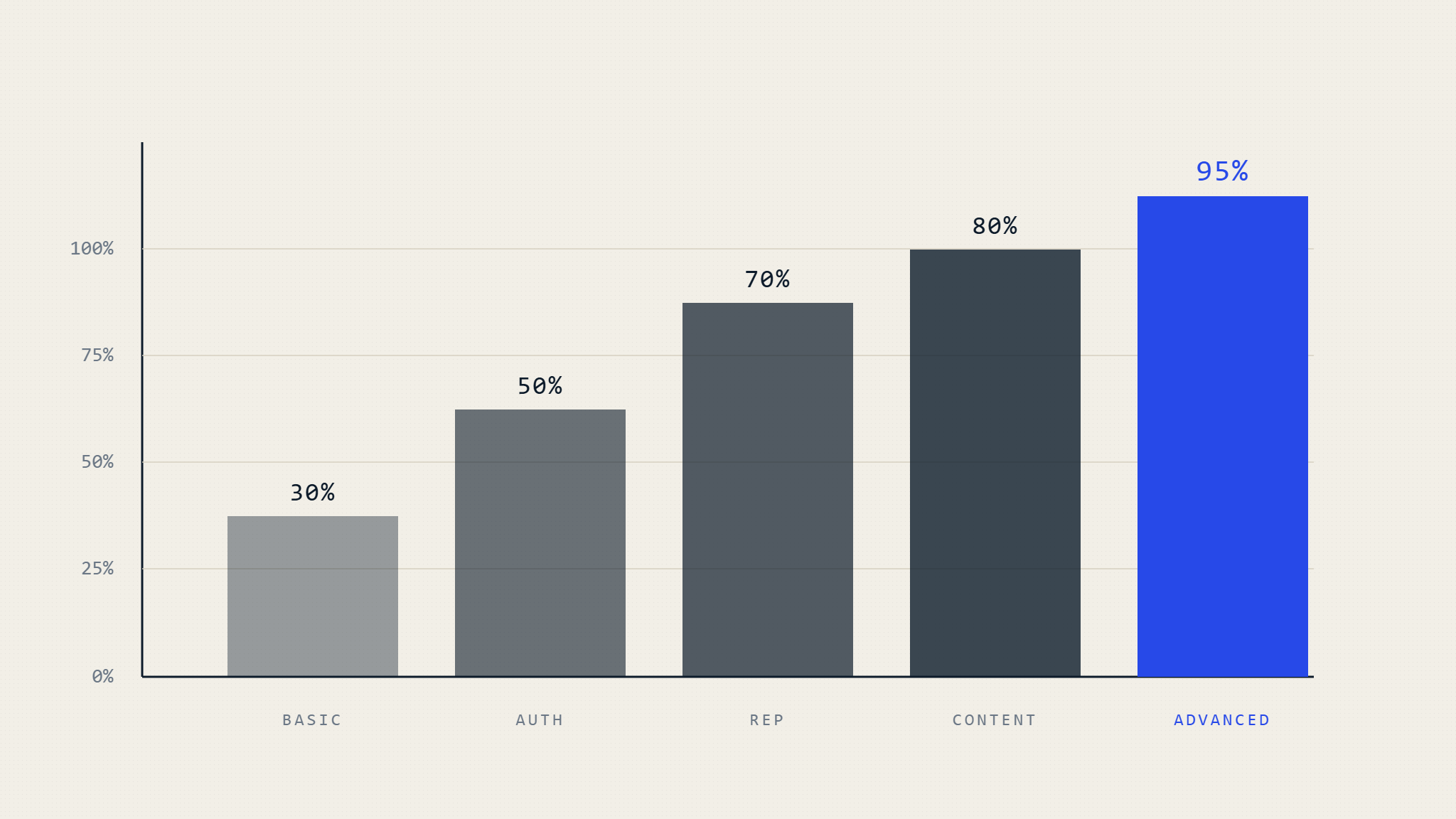
Poor inbox placement rates plague organizations worldwide, with legitimate business emails frequently landing in spam folders or disappearing entirely. While many IT teams focus solely on technical email configuration, achieving consistent 95%+ inbox placement requires a strategic approach that combines authentication protocols, reputation management, and continuous optimization.
This guide provides advanced tactics that security-conscious organizations use to maximize email deliverability while maintaining robust security postures.
I. Understanding Inbox Placement Rate vs. Delivery Rate
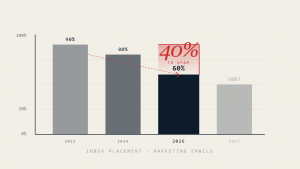
Inbox placement rate measures the percentage of emails that reach recipients’ primary inboxes, not spam or promotional folders. This differs from delivery rate, which only confirms that emails reached the recipient’s mail server.
Key distinctions:
- Delivery rate: Email accepted by receiving server (doesn’t guarantee inbox placement)
- Inbox placement rate: Email successfully delivered to primary inbox folder
- Spam folder rate: Percentage of emails filtered to spam/junk folders
- Missing rate: Emails that disappear entirely (blocked or quarantined)
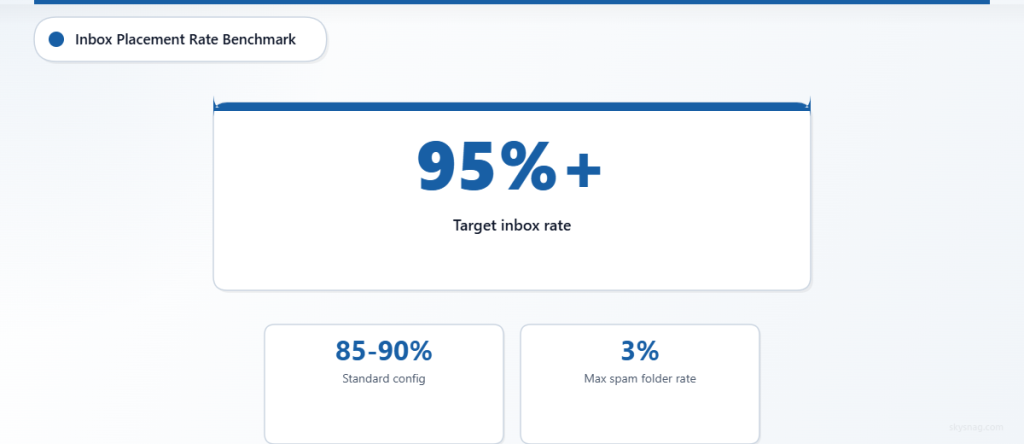
Industry benchmarks show that organizations with properly configured email authentication achieve 85-90% inbox placement rates. However, companies implementing advanced optimization strategies regularly achieve 95%+ rates across major email providers.
II. Core Authentication Foundation
SPF Record Optimization
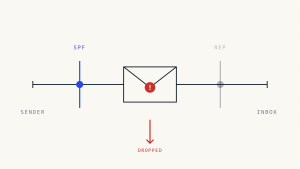
Sender Policy Framework (SPF) records authorize which IP addresses can send email for your domain. Optimized SPF configuration reduces DNS lookups while maintaining comprehensive coverage.
Advanced SPF tactics:
- Limit DNS lookups to under 10 (hard limit prevents SPF failure)
- Use IP ranges instead of multiple include statements where possible
- Implement subdomain-specific SPF records for different services
- Regular audit and cleanup of unused sending sources
Example optimized SPF record:
v=spf1 ip4:198.51.100.0/24 include:_spf.google.com include:spf.protection.outlook.com ~allDKIM Implementation Strategy
DomainKeys Identified Mail (DKIM) provides cryptographic authentication that mailbox providers heavily weight in reputation calculations.
DKIM best practices for maximum impact:
- Use 2048-bit RSA keys (1024-bit keys are increasingly deprecated)
- Implement multiple DKIM selectors for different mail streams
- Sign critical headers including Subject, From, Date, and Message-ID
- Rotate keys annually to maintain security hygiene
DMARC Policy Evolution
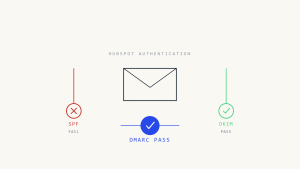
Domain-based Message Authentication, Reporting and Conformance (DMARC) enforcement significantly improves inbox placement rates by demonstrating domain security commitment to mailbox providers.
Progressive DMARC implementation:
- Monitor phase:
p=nonewith reporting enabled - Quarantine phase:
p=quarantinefor partial enforcement - Reject phase:
p=rejectfor maximum protection
Organizations with DMARC reject policies consistently achieve higher inbox placement rates compared to those without enforcement.
III. Advanced Reputation Management
IP Reputation Warming
New IP addresses require systematic reputation building through gradual volume increases and engagement optimization.
IP warming protocol:
- Week 1: 50-200 emails daily to highly engaged subscribers
- Week 2-4: Gradually increase volume by 25-50% weekly
- Monitor bounce rates, spam complaints, and engagement metrics
- Pause increases if reputation metrics decline
Domain Reputation Factors
Mailbox providers evaluate domain reputation through multiple signals beyond authentication:
Critical reputation signals:
- Engagement rates: Opens, clicks, and replies
- List hygiene: Bounce rates under 2%, complaint rates under 0.1%
- Sending consistency: Regular volume patterns vs. sporadic bursts
- Content quality: Spam trigger avoidance and professional formatting
Multi-IP Strategy
Large-volume senders benefit from segmenting traffic across multiple dedicated IP addresses based on content type and engagement levels.
IP segmentation approaches:
- By content type: Transactional vs. marketing emails
- By engagement tier: High-engagement vs. re-engagement campaigns
- By geography: Regional sending for global organizations
- By brand: Separate IPs for different business units
IV. Technical Optimization Tactics
DNS Configuration Excellence
Proper DNS setup supports authentication validation and reduces delivery delays.
DNS optimization checklist:
- Implement reverse DNS (PTR) records for all sending IPs
- Configure appropriate TTL values (3600-7200 seconds recommended)
- Use authoritative DNS servers with global distribution
- Monitor DNS propagation across major resolver networks
Message Header Optimization
Email headers provide crucial signals to spam filters and reputation systems.
Header best practices:
- Maintain consistent From domain across campaigns
- Use descriptive, relevant Subject lines without excessive capitalization
- Include proper Message-ID headers with your domain
- Avoid suspicious headers that trigger spam filters
Content and Format Standards
Email content significantly impacts inbox placement rates through automated content filtering.
Content optimization strategies:
- Maintain 60:40 text-to-image ratio minimum
- Use proper HTML structure with alt text for images
- Avoid excessive use of spam trigger words
- Include plain text versions of HTML emails
- Implement proper unsubscribe mechanisms
V. Monitoring and Analytics
Key Performance Indicators
Successful inbox placement optimization requires monitoring multiple metrics simultaneously:
Primary metrics:
- Inbox placement rate: Target 95%+ across major providers
- Spam folder rate: Keep under 3%
- Bounce rate: Maintain under 2%
- Complaint rate: Target under 0.1%
Secondary metrics:
- Authentication pass rates (SPF, DKIM, DMARC)
- Domain and IP reputation scores
- Engagement rates by provider
- Time-to-inbox delivery speeds
Provider-Specific Analysis
Different mailbox providers use varying algorithms for inbox placement decisions.
Provider considerations:
- Microsoft (Outlook/Hotmail): Heavily weights authentication and sender reputation
- Google (Gmail): Emphasizes engagement patterns and machine learning signals
- Yahoo/AOL (Verizon Media): Focuses on list quality and complaint rates
- Apple Mail: Prioritizes user engagement and manual feedback
Deliverability Testing Tools
Regular testing across multiple providers ensures consistent performance:
- Seed list testing: Monitor inbox placement across major providers
- Authentication validation: Verify SPF, DKIM, and DMARC alignment
- Content analysis: Scan for spam triggers and deliverability issues
- Reputation monitoring: Track IP and domain reputation scores
VI. Skysnag Protect Integration

Skysnag Protect streamlines email authentication management and provides comprehensive visibility into delivery performance. The platform automates DMARC implementation while offering detailed analytics for inbox placement optimization.
Key capabilities for inbox placement improvement:
- Automated SPF and DKIM record management
- DMARC policy optimization with gradual enforcement
- Real-time authentication failure alerts
- Comprehensive reporting on email authentication performance
Organizations using Skysnag Protect report significant improvements in inbox placement rates through simplified authentication management and proactive threat detection.
VII. Troubleshooting Common Issues
Authentication Failures
SPF alignment issues:
- Verify all sending sources included in SPF record
- Check for DNS propagation delays
- Monitor for services adding unauthorized IP addresses
DKIM validation problems:
- Confirm DKIM keys properly published in DNS
- Verify signing headers match authentication policy
- Check for key rotation disrupting validation
DMARC policy conflicts:
- Ensure SPF or DKIM alignment requirements met
- Monitor for subdomain policy inheritance issues
- Verify reporting address configuration
Reputation Recovery
When inbox placement rates decline, systematic recovery approaches prove most effective:
Recovery protocol:
- Identify root cause through authentication and engagement analysis
- Reduce sending volume temporarily to high-engagement segments
- Improve list hygiene through bounce and complaint management
- Gradually increase volume while monitoring reputation metrics
- Implement enhanced engagement tactics for dormant subscribers
Provider-Specific Blocks
Individual provider blocks require targeted remediation strategies:
Block resolution steps:
- Review provider feedback loops and postmaster tools
- Analyze recent campaign performance for triggering factors
- Submit delisting requests with detailed remediation plans
- Implement provider-specific best practices
- Monitor for successful inbox placement restoration
VIII. Advanced Automation Strategies
Dynamic Content Optimization
Machine learning algorithms can optimize content elements for maximum inbox placement:
Automated optimization areas:
- Subject line A/B testing for engagement improvement
- Send time optimization based on recipient behavior
- Content personalization for engagement enhancement
- List segmentation for targeted messaging
Predictive Analytics
Advanced analytics help predict and prevent inbox placement issues:
Predictive capabilities:
- Reputation trend analysis for proactive intervention
- Engagement pattern recognition for list optimization
- Authentication failure prediction and prevention
- Campaign performance forecasting
IX. Key Takeaways
Achieving 95%+ inbox placement rates requires a comprehensive approach combining technical excellence with strategic execution:
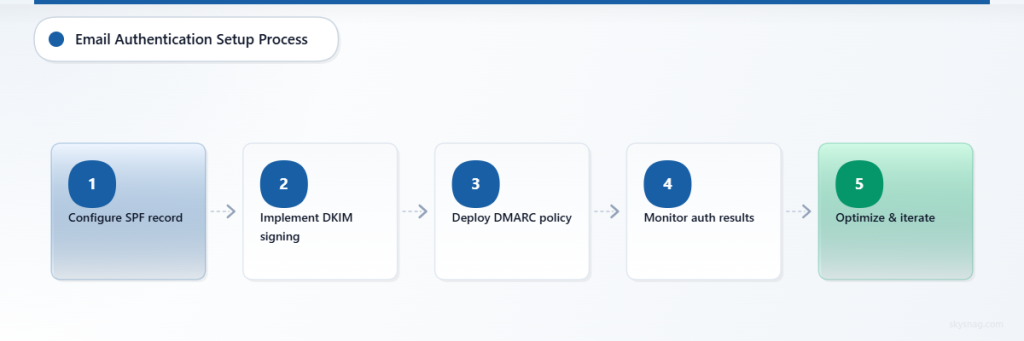
- Foundation first: Implement proper SPF, DKIM, and DMARC authentication
- Reputation management: Focus on engagement, list hygiene, and consistent sending patterns
- Continuous monitoring: Track authentication performance and inbox placement metrics
- Provider awareness: Understand varying requirements across major mailbox providers
- Automation advantage: Leverage tools like Skysnag Protect for simplified management
Organizations that systematically implement these advanced tactics consistently achieve superior inbox placement rates while maintaining strong security postures. The investment in proper email authentication and deliverability optimization pays dividends through improved communication effectiveness and enhanced brand reputation.
Ready to optimize your organization’s inbox placement rate? Start with Skysnag Protect to implement enterprise-grade email authentication and gain the visibility needed for 95%+ inbox delivery success.