Resource library
Resources
Your destination for the latest in email security and compliance — expert guidance, product updates, and practical resources.
267
Articles published
Fri Oct 2026
Search our resources
4 Sep 2024 4 min read
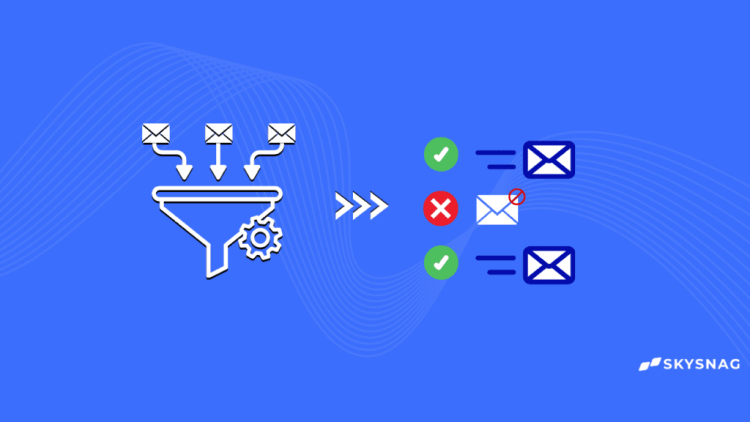
Why Real-Time Email Verification Matters
Email is a fundamental part of personal and professional communication, making accuracy, security, and reliability critical. One effective way to achieve this is through synchronous verification. Here’s why synchronous or real-time verification is essential for emails: Consistency and Reliability Synchronous...
Read the article
5 Proven Strategies to Avoid Email Blacklists
In the digital age, email marketing is a cornerstone of effective communication. However, getting blacklisted can severely damage your sender...
4 min 4 Sep 2024
Navigating DMARC: Monitoring vs. Enforcement
Ensuring email security is essential in today’s world. Organizations worldwide face increasing threats like phishing and spoofing, emphasizing the need...
3 min 4 Sep 2024
CrowdStrike Chaos Sparks Surge in Phishing Attacks
Understanding the Crisis: What Happened and Where We Stand On July 19, 2024, CrowdStrike, a leading cybersecurity firm, experienced a...
2 min 18 Jul 2024

Gmail.com’s New DMARC Policy Impacting Businesses
Essential DMARC Update for Gmail.com In October 2023, a significant announcement from Google and Yahoo introduced new sender requirements for...
2 min 7 Mar 2024
Google and Yahoo New Email Requirements: What You Need to Know
Google and Yahoo are changing their email requirements. If you send emails to Gmail or Yahoo accounts, be aware that...
3 min 11 Jan 2024

How SignWell relies on Skysnag to authenticate and deliver 5M emails
Meet SignWell SignWell is an e-signature platform that is trusted by over 61,000 businesses globally. Businesses depend on SignWell to...
2 min 20 Dec 2023
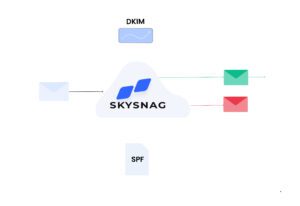
What is SPF? What is DKIM? How do they help in deliverability?
SPF & DKIM acronyms might sound unfamiliar, technical, and scary. Maybe you have heard of them yet never cared enough...
5 min 12 Oct 2023
How DMARC Facilitates GDPR Compliance
The importance of DMARC for GDPR is straightforward: It offers transparency into any email sending service that uses your company’s...
2 min 12 Oct 2023
Topics
Browse by category
Pick a category to read posts on that topic from the Authentication Journal.
Formats
Browse by type
Choose a content type to read case studies, guides, and other posts from the Authentication Journal.
The Skysnag Scanner
Check your domain's DMARC compliance.
Five protocols. Sixty seconds. No account. A full authentication-posture report on your domain, delivered before your coffee cools.
DMARC · SPF · DKIM BIMI · MTA-STS · TLS-RPT No signup required