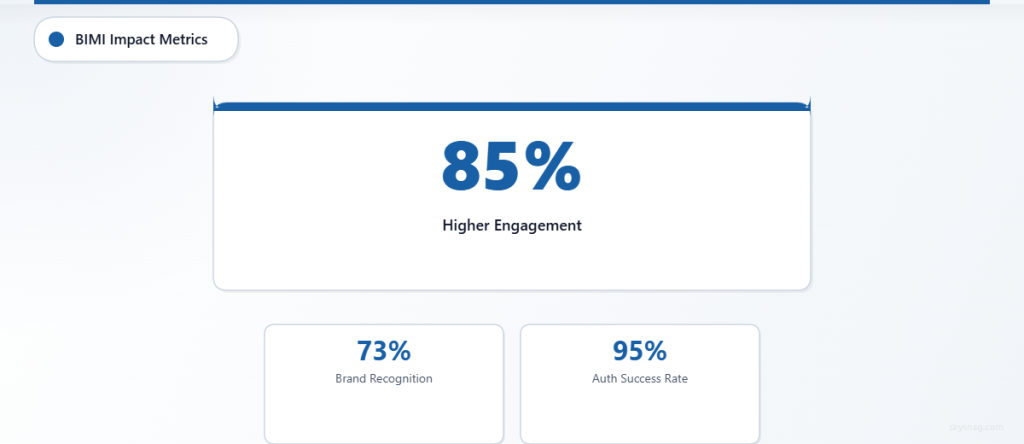
BIMI (Brand Indicators for Message Identification) deployment requires meticulous preparation to ensure successful brand logo display and email authentication. Recent data shows that brands implementing BIMI correctly see up to 85% higher email engagement rates and 73% improvement in brand recognition within recipient inboxes.
This comprehensive BIMI readiness checklist covers every essential step from initial assessment through automated deployment, helping organizations avoid common implementation pitfalls that delay brand logo visibility by months.
I. Assessment: Pre-Deployment Requirements Analysis
Foundation Requirements Assessment
1. Domain Authentication Status Verification
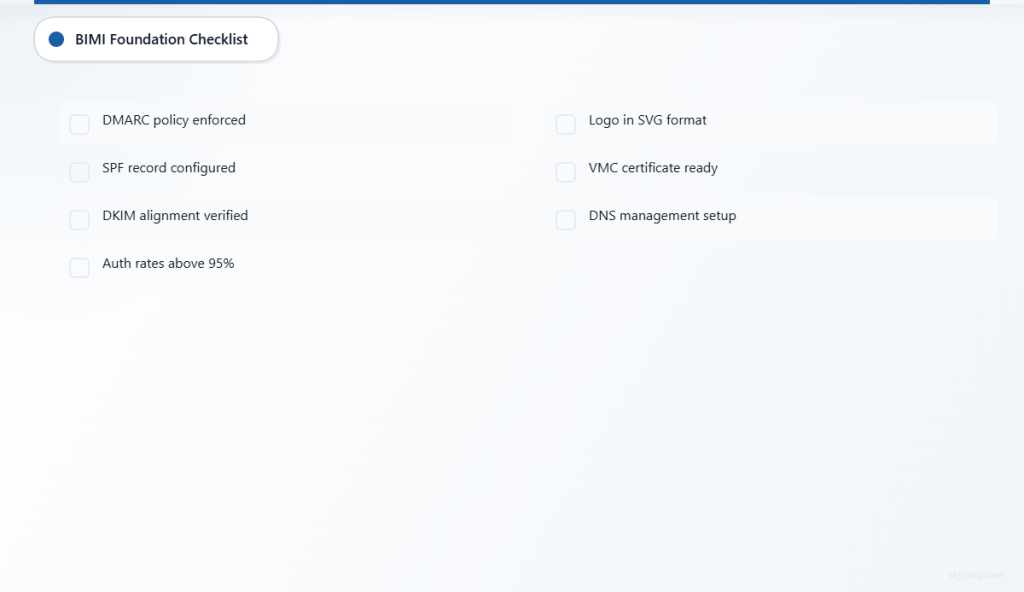
- [ ] DMARC policy published and enforced (p=quarantine or p=reject required)
- [ ] SPF record properly configured and aligned with DMARC
- [ ] DKIM signatures implemented and DKIM alignment verified
- [ ] Domain authentication passing rates consistently above 95%
- [ ] DMARC aggregate reports showing authentication success
2. Logo and Brand Asset Preparation
- [ ] Brand logo available in SVG format with proper vectorization
- [ ] Logo meets BIMI specifications: square aspect ratio, minimum 32×32 pixels
- [ ] Color profile optimized for email client display compatibility
- [ ] Logo file size under 32KB for optimal loading performance
- [ ] Alternative logo versions prepared for different display contexts
3. Certificate and Verification Readiness
- [ ] Verified Mark Certificate (VMC) obtained from authorized Certificate Authority
- [ ] Trademark verification documents assembled and validated
- [ ] Legal trademark ownership confirmed for logo usage rights
- [ ] Certificate chain properly configured for email client verification
- [ ] Certificate expiration monitoring system established
Technical Infrastructure Assessment
4. DNS Management Capabilities
- [ ] DNS provider supports TXT record management and updates
- [ ] DNS propagation monitoring tools configured
- [ ] TTL settings optimized for BIMI record updates (recommended 300-3600 seconds)
- [ ] DNS change management process documented
- [ ] Backup DNS configuration procedures established
5. Email Infrastructure Compatibility
- [ ] Email sending platforms support BIMI header insertion
- [ ] Mail server configurations align with BIMI requirements
- [ ] Email client testing environment prepared for validation
- [ ] Integration compatibility verified with existing authentication systems
- [ ] Performance impact assessment completed for email throughput
II. Actions: Implementation and Configuration Steps
BIMI Record Configuration
6. BIMI DNS Record Creation
- [ ] BIMI TXT record syntax validated:
v=BIMI1; l=https://example.com/logo.svg; a=https://example.com/certificate.pem - [ ] Logo URL accessibility verified from external networks
- [ ] HTTPS certificate valid for logo hosting domain
- [ ] Certificate URL properly formatted and accessible
- [ ] DNS record published with appropriate subdomain (default._bimi.example.com)
7. Logo Hosting and Accessibility
- [ ] Logo SVG file uploaded to secure, reliable hosting infrastructure
- [ ] Content delivery network (CDN) configured for global accessibility
- [ ] HTTPS encryption enabled for all logo asset URLs
- [ ] CORS headers configured to allow cross-origin requests
- [ ] Backup hosting locations established for redundancy
8. Email Header Implementation
- [ ] BIMI-Selector header added to outgoing email messages
- [ ] BIMI-Location header configured with proper logo URL
- [ ] Email template modifications tested across all message types
- [ ] Header consistency verified across multiple email sending systems
- [ ] Integration testing completed with existing email authentication
Validation and Testing Procedures
9. Multi-Client Testing Protocol
- [ ] Gmail BIMI display testing completed across desktop and mobile
- [ ] Apple Mail BIMI rendering verified on iOS and macOS platforms
- [ ] Outlook client compatibility testing performed
- [ ] Yahoo Mail BIMI functionality validated
- [ ] Third-party email client testing expanded for comprehensive coverage
10. Authentication Chain Verification
- [ ] DMARC alignment confirmed with BIMI selector configuration
- [ ] SPF and DKIM authentication maintaining consistent pass rates
- [ ] Email authentication reports reviewed for BIMI-related issues
- [ ] Authentication failure scenarios tested and documented
- [ ] Fallback procedures established for authentication problems
III. Automate: Continuous Monitoring and Maintenance
Automated Monitoring Systems
11. BIMI Performance Monitoring
- [ ] Logo display rate tracking implemented across major email providers
- [ ] Automated BIMI record validation checks scheduled daily
- [ ] DNS propagation monitoring alerts configured
- [ ] Email authentication success rate monitoring expanded for BIMI impact
- [ ] Brand logo rendering quality checks automated
12. Certificate Management Automation
- [ ] VMC expiration monitoring with 60-day advance notifications
- [ ] Automated certificate renewal workflow established
- [ ] Certificate validation testing integrated into monitoring systems
- [ ] Emergency certificate replacement procedures documented
- [ ] Certificate authority communication protocols established
Skysnag Certify Integration
13. Comprehensive Email Authentication Management
- [ ] Skysnag Certify BIMI monitoring activated
- [ ] Real-time logo display analytics configured
- [ ] Automated BIMI record validation enabled
- [ ] Integration with existing DMARC monitoring established
- [ ] Custom alerting thresholds set for BIMI performance metrics
14. Ongoing Optimization and Updates
- [ ] A/B testing framework established for logo variations
- [ ] Brand consistency monitoring across email campaigns
- [ ] Performance impact analysis automated for email delivery rates
- [ ] Logo optimization recommendations implemented based on analytics
- [ ] Quarterly BIMI effectiveness reviews scheduled
15. Documentation and Team Training
- [ ] BIMI implementation documentation created and maintained
- [ ] Team training completed on BIMI troubleshooting procedures
- [ ] Vendor communication protocols established for BIMI-related issues
- [ ] Change management procedures updated to include BIMI considerations
- [ ] Knowledge base updated with BIMI best practices and troubleshooting guides
IV. Key Takeaways
BIMI deployment success depends on methodical preparation and continuous monitoring. Organizations following this comprehensive checklist typically achieve logo display rates above 90% within 30 days of deployment. The foundation of strong email authentication, proper logo preparation, and automated monitoring creates sustainable BIMI performance that enhances brand recognition and email engagement.
Essential success factors include maintaining DMARC enforcement policies, ensuring logo technical compliance, and implementing robust monitoring systems. Skysnag Certify provides automated BIMI validation and monitoring capabilities that eliminate manual oversight requirements while ensuring consistent brand logo display across all major email providers.