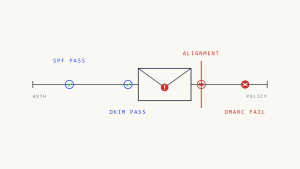
Verified Mark Certificates (VMCs) represent the gold standard for email authentication, enabling organizations to display their brand logos directly in recipients’ inboxes while providing cryptographic proof of brand ownership. However, implementing VMCs involves complex validation requirements and potential failure points that can undermine brand protection efforts.
I. What Are VMC Certificates and Why They Matter
Verified Mark Certificates are specialized digital certificates that bind an organization’s trademark to their domain, enabling secure brand logo display through the Brand Indicators for Message Identification (BIMI) standard. Unlike standard SSL certificates that secure connections, VMCs specifically validate trademark ownership and provide legal attestation for brand representation in email.
When properly implemented, VMCs allow your organization’s logo to appear next to authenticated emails in major email providers like Gmail, Yahoo, and Apple Mail. This visual verification helps recipients identify legitimate communications while potentially improving email engagement rates and reducing successful phishing attempts targeting your brand.
However, VMC implementation can fail in several critical ways that organizations must understand:
Silent validation failures occur when the certificate authority cannot verify trademark ownership during the validation process. This commonly happens when trademark documentation is incomplete, the trademark isn’t registered in acceptable jurisdictions, or there’s a mismatch between the trademark holder and the requesting organization.
BIMI enforcement gaps can prevent logo display even with valid VMCs. Major email providers implement different VMC validation requirements, and some may not honor certificates from certain authorities or may have additional reputation requirements beyond VMC possession.
Certificate renewal complications frequently disrupt brand display when organizations fail to renew VMCs before expiration or when trademark status changes during the certificate lifecycle.
II. VMC Validation Process and Requirements
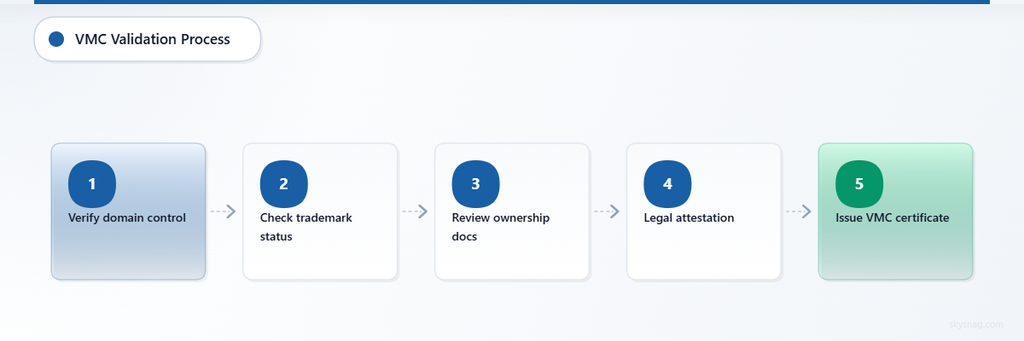
The VMC validation process involves multiple verification layers that extend beyond traditional certificate validation. Certificate authorities must verify both domain control and trademark ownership before issuing a VMC.
Domain validation follows standard procedures where the certificate authority confirms the requesting organization controls the domain for which they’re requesting the VMC. This typically involves DNS challenges or email verification to the domain administrator.
Trademark validation requires submission of trademark registration documentation from acceptable trademark offices. The certificate authority reviews the trademark status, ownership details, and ensures the trademark covers appropriate goods and services classifications that align with email communication use.
Legal attestation involves the certificate authority confirming the organization has legal rights to use the trademark in the context of email communications and that no conflicting claims exist that would prevent VMC issuance.
The validation process commonly fails when organizations encounter these conditions:
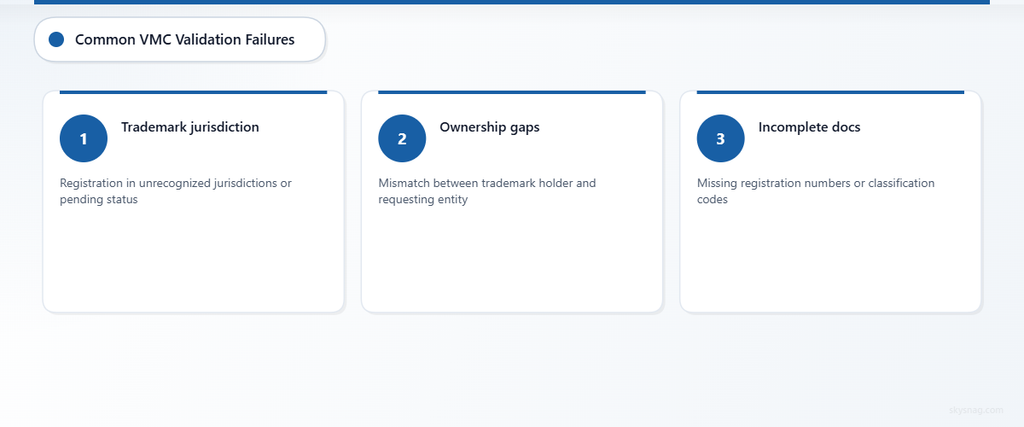
Trademark jurisdiction issues arise when trademarks are registered only in jurisdictions not recognized by the certificate authority or when registration status is pending rather than active.
Ownership verification gaps occur when the entity requesting the VMC differs from the trademark owner, requiring additional legal documentation to establish authorized use rights.
Documentation insufficiency happens when submitted trademark evidence lacks required details like registration numbers, classification codes, or authenticated copies of registration certificates.
III. VMC Certificate Requirements and Technical Specifications
VMC certificates must meet specific technical and legal requirements that distinguish them from other certificate types. Understanding these requirements helps organizations prepare for successful validation while avoiding common implementation failures.
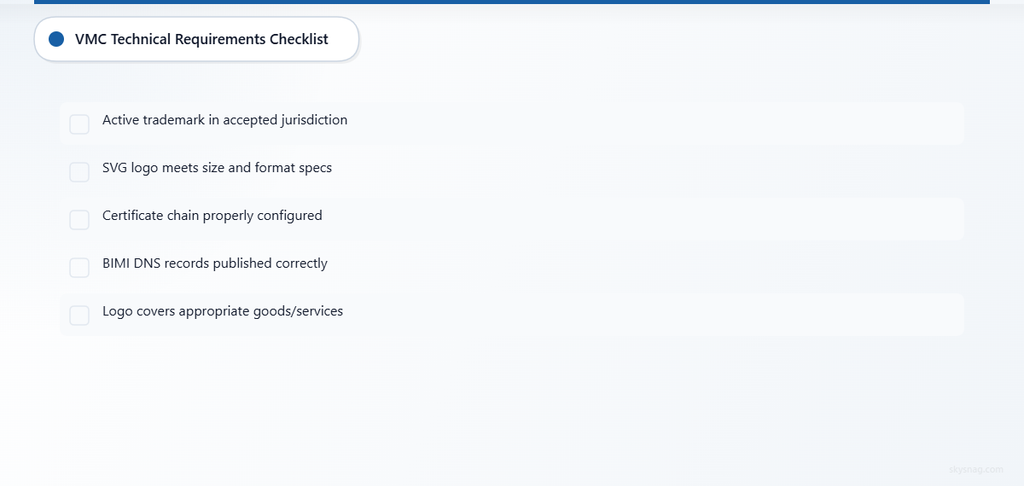
Trademark requirements mandate that the organization possesses valid trademark registrations in jurisdictions accepted by the certificate authority. The trademark must be active, cover appropriate goods/services classifications, and clearly identify the logo or mark being certified.
Technical specifications require that VMC certificates include specific extensions and object identifiers that distinguish them as authorized for BIMI use. The certificate must also specify the exact logo file being validated and include cryptographic signatures that bind the trademark to the requesting domain.
Logo format requirements mandate that certified logos meet strict SVG specifications, including file size limits, color profiles, and structural requirements that ensure consistent display across email platforms.
However, several technical failure modes can prevent successful VMC deployment:
Certificate chain validation errors occur when intermediate certificates are missing or improperly configured, preventing email providers from validating the complete certificate trust chain back to recognized root authorities.
Logo specification violations happen when SVG files contain unsupported elements, exceed size limits, or include external references that violate BIMI security requirements.
DNS configuration failures can prevent BIMI record publication or create conflicts between BIMI selectors and VMC specifications, resulting in logo display failures despite valid certificates.
IV. Business Impact and Strategic Considerations
VMC certificates provide measurable business benefits beyond simple logo display, but organizations must understand both positive impacts and potential risks when implementing brand authentication strategies.
Brand protection benefits include reduced successful phishing attacks using your brand, improved customer confidence in email communications, and legal advantages when pursuing trademark enforcement against cybercriminals.
Email engagement improvements commonly result from increased recipient trust and visual brand recognition, though the magnitude of improvement varies significantly based on industry, customer demographics, and existing brand recognition levels.
Compliance advantages emerge when organizations subject to regulatory requirements can demonstrate enhanced email authentication controls. VMCs support the intent of various cybersecurity frameworks that emphasize protecting against unauthorized brand use and improving communication security.
However, organizations must also consider potential negative impacts and failure conditions:
Implementation costs extend beyond certificate fees to include ongoing trademark maintenance, legal review processes, and technical implementation resources that may not provide proportional returns for smaller organizations.
Vendor dependency risks create potential vulnerabilities when certificate authorities change validation requirements, pricing structures, or business focus, potentially disrupting established brand authentication programs.
Partial deployment limitations occur when not all email providers support VMC validation or when different providers implement conflicting requirements, creating inconsistent brand display experiences.
V. VMC Implementation Strategy and Best Practices
Successful VMC implementation requires careful planning that addresses both technical requirements and business continuity considerations. Organizations should develop comprehensive strategies that account for potential failure scenarios.
Pre-implementation assessment should evaluate trademark portfolio completeness, identify potential jurisdiction gaps, and confirm that existing email authentication infrastructure meets DMARC enforcement requirements necessary for BIMI eligibility.
Phased deployment approach allows organizations to test VMC functionality with subset domains or specific email flows before full implementation, helping identify configuration issues before they impact primary communication channels.
Monitoring and maintenance planning must account for certificate renewal timelines, trademark status monitoring, and ongoing compliance with evolving BIMI specifications across different email providers.
Critical implementation considerations include:
- Verify DMARC policy is set to quarantine or reject before initiating VMC process
- Confirm trademark registrations are active in jurisdictions accepted by chosen certificate authority
- Validate logo files meet SVG specifications and BIMI technical requirements
- Establish certificate renewal procedures that account for trademark validation timelines
- Implement monitoring for BIMI record publication and logo display across major email providers
- Document fallback procedures for scenarios where VMC validation fails or expires
Organizations should also prepare for common failure scenarios by establishing clear escalation procedures when VMC validation encounters issues, maintaining backup authentication strategies that don’t depend on logo display, and ensuring that email deliverability doesn’t become dependent on VMC functionality.
Skysnag Certify streamlines VMC certificate management by automating BIMI record configuration, monitoring certificate status across multiple domains, and providing alerts when validation issues require attention. The platform helps organizations maintain consistent brand authentication while reducing the complexity of managing VMC requirements across enterprise email infrastructure.
VI. Key Takeaways
VMC certificates provide powerful brand protection and engagement benefits, but successful implementation requires understanding both technical requirements and potential failure modes. Organizations must carefully evaluate trademark portfolios, prepare for complex validation processes, and maintain ongoing monitoring to ensure continued effectiveness.
The business value of VMCs extends beyond simple logo display to include measurable improvements in brand protection and customer trust. However, implementation costs and technical complexity mean VMCs are most beneficial for organizations with strong brand recognition and mature email authentication programs.
Success with VMC certificates depends on thorough planning, robust technical implementation, and ongoing maintenance that accounts for both certificate management and trademark portfolio changes over time.
Ready to implement VMC certificates for your organization? Skysnag Certify provides comprehensive BIMI and VMC management tools that simplify implementation while ensuring ongoing compliance with evolving requirements.