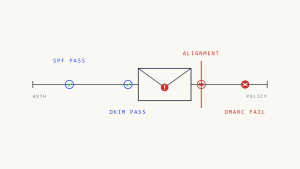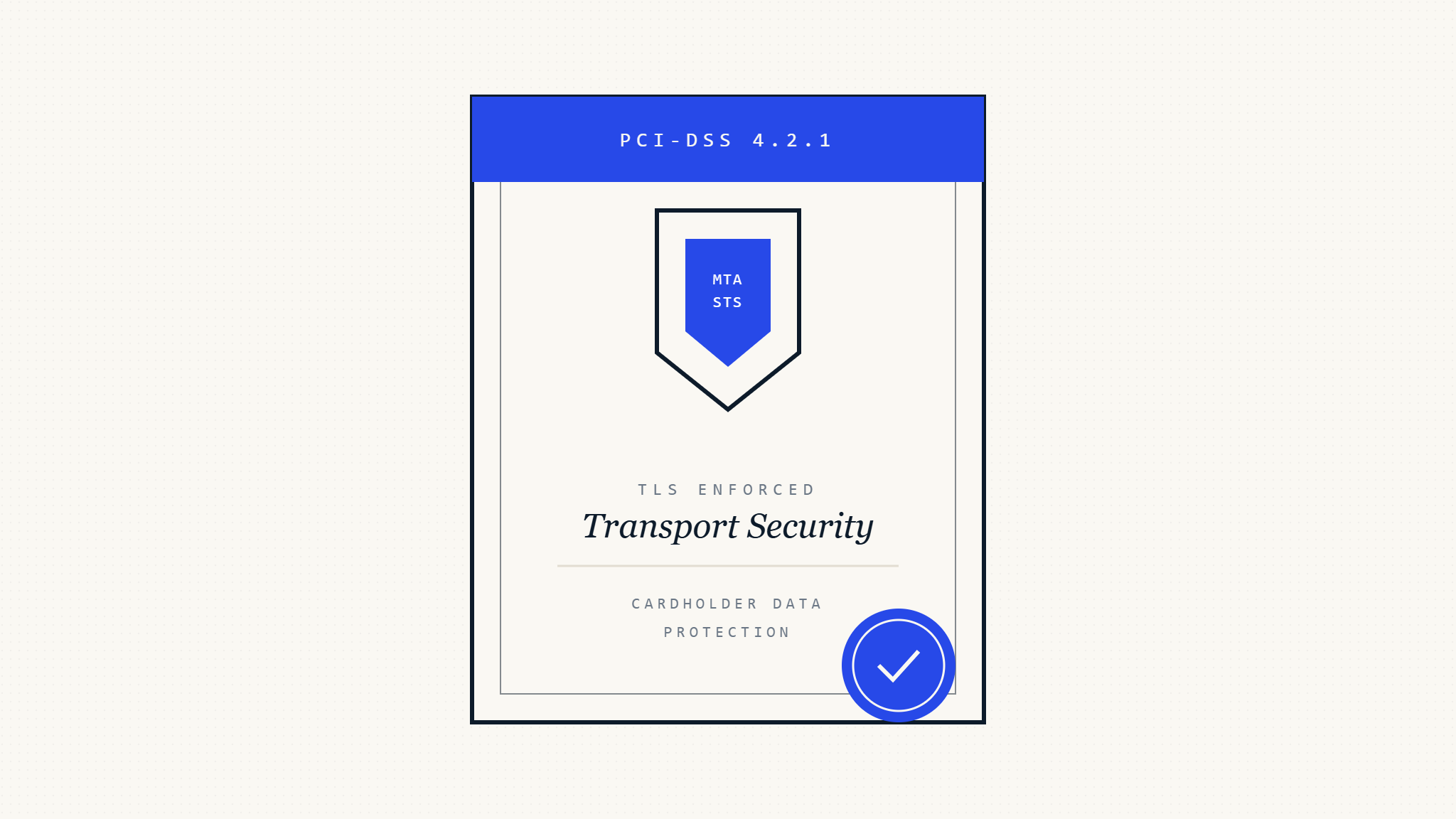
Mail Transport Agent Strict Transport Security (MTA-STS) represents a critical evolution in email security, moving organizations beyond the vulnerabilities of opportunistic TLS encryption. For organizations subject to PCI-DSS requirements, understanding how MTA-STS supports compliance objectives becomes essential as payment data protection demands strengthen in 2026.
While PCI-DSS 4.2.1 emphasizes strong cryptographic implementations for protecting cardholder data in transit, MTA-STS provides the enforcement mechanisms that opportunistic TLS cannot guarantee. This technical reference examines how MTA-STS implementation supports PCI-DSS compliance objectives and addresses the specific challenges of securing email communications in payment processing environments.
I. Understanding PCI-DSS 4.2.1 Encryption Requirements
PCI-DSS requirement 4.2.1 focuses on implementing strong cryptography and security protocols during transmission of cardholder data across open, public networks. The standard emphasizes that organizations must ensure sensitive authentication data is never sent unencrypted over networks that could be easily intercepted by malicious individuals.
The requirement specifically addresses the protection of cardholder data during transmission, which includes email communications containing payment-related information. However, PCI-DSS does not mandate specific email security protocols like MTA-STS. Instead, it establishes objectives that organizations must meet through appropriate technical controls.
Traditional email transmission relies on opportunistic TLS, which attempts encryption when available but falls back to unencrypted transmission when TLS negotiation fails. This fallback behavior creates compliance gaps that MTA-STS helps address by enforcing TLS encryption requirements.
Key PCI-DSS 4.2.1 Objectives
Organizations implementing email security controls must address several core objectives:
- Encryption Enforcement: Ensuring cryptographic protection cannot be bypassed or downgraded during transmission
- Authentication Verification: Validating the identity of receiving mail servers before transmitting sensitive data
- Policy Consistency: Maintaining uniform security standards across all email communications
- Monitoring Capabilities: Detecting and responding to encryption failures or policy violations
II. The Limitations of Opportunistic TLS
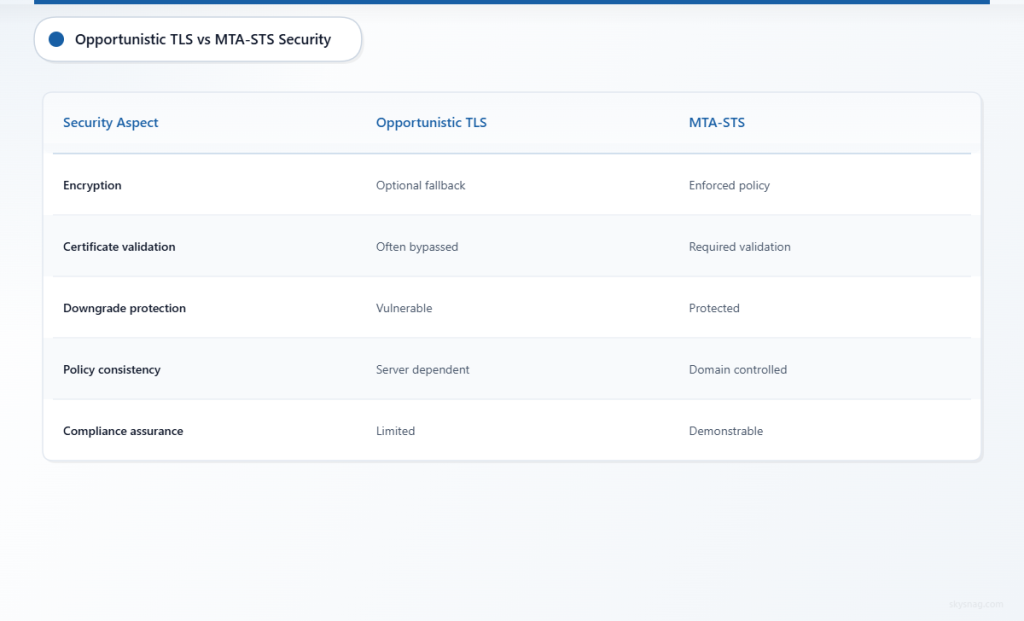
Opportunistic TLS, while better than no encryption, presents several security challenges that impact compliance posture:
Downgrade Attack Vulnerability
Opportunistic TLS implementations can be manipulated by attackers who intercept the initial SMTP connection and force a downgrade to unencrypted transmission. This attack vector, known as SMTP STARTTLS stripping, allows malicious actors to capture sensitive data that organizations believe is encrypted.
The vulnerability occurs during the SMTP handshake process when the sending mail server queries whether the receiving server supports TLS encryption. An attacker positioned between the servers can modify the response, indicating that TLS is not available, forcing transmission to proceed without encryption.
Certificate Validation Gaps
Standard opportunistic TLS implementations often accept invalid or untrusted certificates to maintain email deliverability. This behavior, while preventing email delays, undermines the authentication aspects of TLS encryption.
Many mail servers default to accepting self-signed certificates or those with hostname mismatches rather than blocking email transmission. From a compliance perspective, this represents a significant control weakness that could expose cardholder data to interception.
Lack of Policy Enforcement
Organizations using only opportunistic TLS cannot guarantee that their email communications will be encrypted. The decision to encrypt depends on the receiving server’s capabilities and configuration, creating inconsistent security posture across different business relationships.
This inconsistency makes it difficult for organizations to demonstrate compliance with PCI-DSS encryption requirements, as they cannot provide assurance that all cardholder data transmissions are properly protected.
III. MTA-STS Technical Implementation
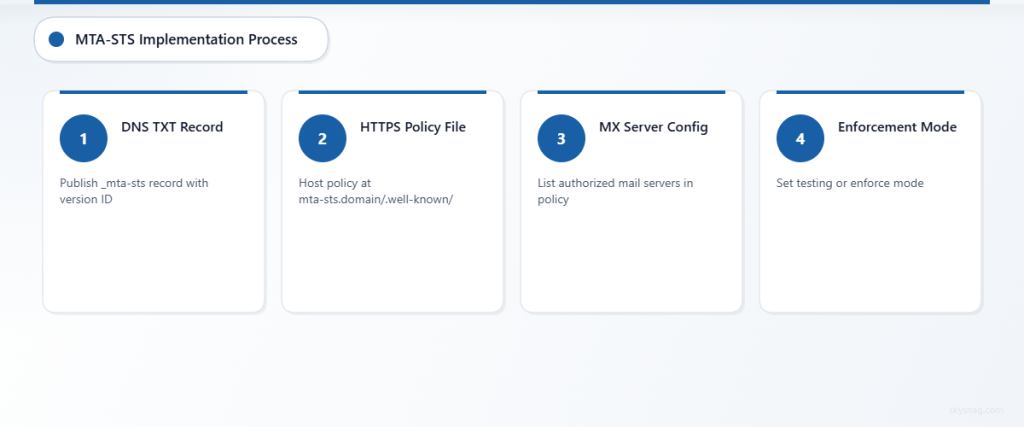
MTA-STS addresses opportunistic TLS limitations through a combination of DNS records, HTTPS-hosted policies, and SMTP enforcement mechanisms. The implementation requires several coordinated components working together to ensure encryption policy compliance.
DNS TXT Record Configuration
The initial MTA-STS implementation begins with a DNS TXT record that signals policy availability and version:
_mta-sts.example.com. IN TXT "v=STSv1; id=20260315;"This record serves two purposes: it indicates that the domain publishes an MTA-STS policy and provides a version identifier that sending mail servers can use to cache policy information efficiently.
The version identifier should be updated whenever policy changes are made, ensuring that sending servers retrieve the latest policy configuration rather than relying on potentially outdated cached versions.
HTTPS Policy File Structure
The core MTA-STS policy is hosted as an HTTPS-accessible file at https://mta-sts.example.com/.well-known/mta-sts.txt. This policy file defines the specific requirements for email encryption and server authentication:
version: STSv1
mode: enforce
mx: mail1.example.com
mx: mail2.example.com
max_age: 86400
The policy file components address specific compliance requirements:
- Mode Setting: Determines whether violations are reported only or actively blocked
- MX Records: Specifies authorized mail servers that can receive encrypted email
- Maximum Age: Defines policy caching duration for sending mail servers
Certificate Validation Requirements
MTA-STS policies specify certificate validation requirements that go beyond opportunistic TLS defaults. Sending mail servers must verify that receiving server certificates meet specific criteria before transmitting email.
Valid certificates must be issued by a trusted certificate authority, match the hostname specified in MX records, and remain within their validity period. These requirements prevent the certificate validation bypasses common in opportunistic TLS implementations.
IV. Supporting PCI-DSS Compliance Objectives
MTA-STS implementation supports several key PCI-DSS compliance objectives through technical enforcement mechanisms:
Encryption Assurance
The “enforce” mode in MTA-STS policies ensures that email transmission fails rather than falling back to unencrypted delivery. This behavior aligns with PCI-DSS requirements for protecting cardholder data by preventing unencrypted transmission of sensitive information.
Organizations can demonstrate that their email security controls prevent cardholder data from being transmitted without encryption, addressing auditor concerns about opportunistic TLS fallback behavior.
Identity Verification
MTA-STS certificate validation requirements help ensure that email is delivered only to authorized recipients. By requiring valid certificates that match specified hostnames, organizations can reduce the risk of data interception through fraudulent mail servers.
This verification supports PCI-DSS objectives related to ensuring that cardholder data is transmitted only to authorized parties and cannot be easily intercepted by malicious actors.
Policy Documentation
The HTTPS-hosted policy file provides clear documentation of email security requirements that auditors can review and validate. This documentation helps demonstrate compliance with PCI-DSS requirements for implementing and maintaining security policies.
Organizations can point to their MTA-STS policy as evidence of their commitment to email encryption and their technical implementation of security controls.
V. Implementation Challenges and Solutions
DNS Security Considerations
MTA-STS relies on DNS for initial policy discovery, making DNS security critical to overall implementation effectiveness. Organizations should implement DNS over HTTPS (DoH) or DNS over TLS (DoT) to protect against DNS manipulation attacks.
DNSSEC implementation provides additional protection by enabling cryptographic verification of DNS responses. This prevents attackers from modifying MTA-STS TXT records to disable policy enforcement.
Certificate Management Complexity
MTA-STS implementation increases certificate management requirements, as organizations must maintain valid certificates for both their mail servers and the HTTPS-hosted policy file. Certificate expiration can break email delivery, making automated certificate management essential.
Consider implementing automated certificate renewal through services like Let’s Encrypt or internal certificate authorities to reduce the operational overhead of MTA-STS maintenance.
Testing and Validation Procedures
Before enabling enforcement mode, organizations should thoroughly test their MTA-STS implementation using testing mode to identify potential delivery issues. This testing phase allows identification of legitimate mail servers that may not support required encryption standards.

Skysnag Protect’s MTA-STS monitoring capabilities help organizations validate their policy configuration and identify delivery issues before they impact business operations.
VI. Monitoring and Compliance Reporting
TLSRPT Integration
TLS Reporting (TLSRPT) provides visibility into MTA-STS policy compliance and helps organizations understand email delivery patterns. TLSRPT reports show which sending servers successfully comply with MTA-STS policies and which encounter issues.
Configure TLSRPT reporting to collect data on encryption failures, certificate validation issues, and policy violations. This data supports compliance documentation and helps identify potential security issues.
Policy Violation Analysis
Regular analysis of MTA-STS policy violations helps organizations understand their email security posture and identify areas for improvement. Focus on violations that indicate potential security issues rather than configuration problems.
Common violation patterns include certificate validation failures from legitimate senders and policy enforcement issues during server maintenance windows. Distinguishing between security-relevant violations and operational issues is crucial for effective monitoring.
Compliance Documentation
Maintain documentation that demonstrates MTA-STS implementation effectiveness for compliance audits. This documentation should include policy configuration, violation reports, and remediation activities.
Organizations using Skysnag Protect can leverage automated reporting features to generate compliance documentation that demonstrates adherence to email encryption requirements.
VII. Integration with Broader Email Security
DMARC Coordination
MTA-STS works alongside DMARC to provide comprehensive email security coverage. While DMARC addresses authentication and anti-spoofing, MTA-STS focuses on encryption enforcement during transmission.
Coordinate MTA-STS and DMARC policies to ensure consistent security posture across all email communications. Both policies should reflect the organization’s risk tolerance and compliance requirements.
SPF and DKIM Considerations
Sender Policy Framework (SPF) and DomainKeys Identified Mail (DKIM) provide complementary authentication mechanisms that work with MTA-STS to create defense-in-depth email security.
Ensure that SPF and DKIM configurations support the mail servers specified in MTA-STS policies. Inconsistent configurations can create delivery issues or security gaps.
VIII. Practical Implementation Checklist
Use the checklist below as a practical starting point for MTA-STS implementation. The exact requirements will depend on your mail server configuration and compliance objectives.
- [ ] Assess current mail server TLS capabilities and certificate management procedures.
- [ ] Create MTA-STS policy file defining encryption requirements and authorized mail servers.
- [ ] Configure HTTPS hosting for MTA-STS policy with valid SSL certificate.
- [ ] Implement DNS TXT record pointing to MTA-STS policy location.
- [ ] Deploy MTA-STS policy in testing mode to identify potential delivery issues.
- [ ] Configure TLSRPT reporting to monitor policy compliance and violations.
- [ ] Test email delivery with major business partners and email providers.
- [ ] Document policy configuration and validation procedures for compliance audits.
- [ ] Transition to enforcement mode after successful testing period.
- [ ] Establish ongoing monitoring and maintenance procedures for policy updates.
IX. Edge Cases and Special Considerations
Legacy Mail Server Compatibility
Some legacy mail servers may not support the TLS versions or cipher suites required by modern MTA-STS policies. Organizations must balance security requirements with business continuity when implementing enforcement policies.
Consider implementing graduated enforcement policies that initially focus on high-value business relationships while working to upgrade legacy systems over time.
Third-Party Email Services
Organizations using third-party email services for specific business functions must ensure those services can comply with MTA-STS requirements. This includes marketing platforms, customer support systems, and payment processing notifications.
Coordinate with service providers to understand their MTA-STS support and ensure their implementations align with your policy requirements.
International Email Delivery
Cross-border email delivery may encounter additional challenges related to varying TLS support and certificate authority trust relationships. Organizations with global operations should test MTA-STS policies across different geographical regions.
Consider regional variations in internet infrastructure and certificate authority trust relationships when designing MTA-STS policies for international email communications.
X. Key Takeaways
MTA-STS provides organizations with the technical controls needed to enforce email encryption consistently, supporting PCI-DSS 4.2.1 objectives for protecting cardholder data during transmission. Unlike opportunistic TLS, MTA-STS prevents downgrade attacks and ensures that email communications cannot fall back to unencrypted transmission.
Implementation requires careful coordination of DNS records, HTTPS-hosted policies, and certificate management procedures. Organizations benefit from testing policies thoroughly before enabling enforcement mode and establishing ongoing monitoring procedures to ensure continued effectiveness.
The integration of MTA-STS with existing email authentication protocols creates a comprehensive security framework that addresses both encryption and authentication requirements. This layered approach aligns with compliance best practices and provides the technical controls necessary to demonstrate adherence to payment card industry security standards.
Organizations seeking to implement MTA-STS as part of their compliance strategy should consider using comprehensive email security platforms like Skysnag Protect to manage the complexity of coordinated email security policies and ensure ongoing compliance with evolving security requirements.