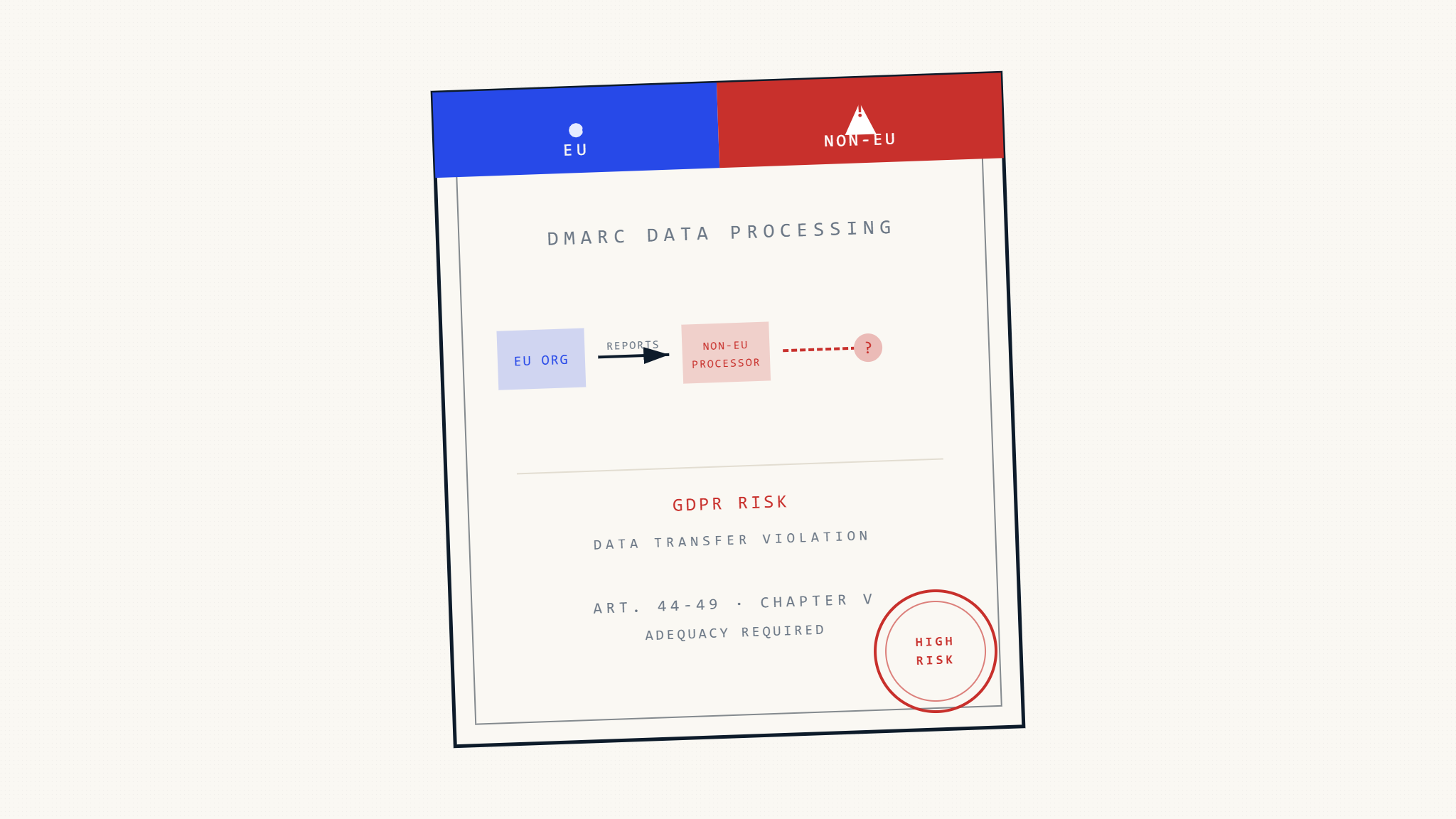
DMARC data processing through non-EU providers may raise privacy considerations for organizations whose data contains personal data elements for European organizations. When DMARC providers route aggregate reports through third-party processors outside the European Union, they may create compliance considerations for organizations subject to GDPR where personal data is involved and data governance gaps that could expose sensitive email authentication data to jurisdictions with different privacy protections.
I. The Hidden Privacy Risk in DMARC Implementation
DMARC aggregate reports contain detailed information about email authentication attempts, including IP addresses, sending domains, and message volumes. Organizations should carefully evaluate whether their specific DMARC data contains elements that could be considered personal data under applicable privacy regulations.
The compliance risk intensifies when DMARC providers use non-EU processors for report analysis, storage, or visualization. These third-party arrangements often occur without explicit disclosure to customers, creating a data processing chain that extends beyond the organization’s direct control and potentially outside GDPR jurisdiction.
Data Flow Complexity in DMARC Processing
Modern DMARC providers frequently rely on cloud infrastructure and specialized analytics services to handle the massive volume of aggregate reports. A single large organization might generate millions of DMARC records daily, requiring sophisticated processing capabilities that smaller providers often outsource.
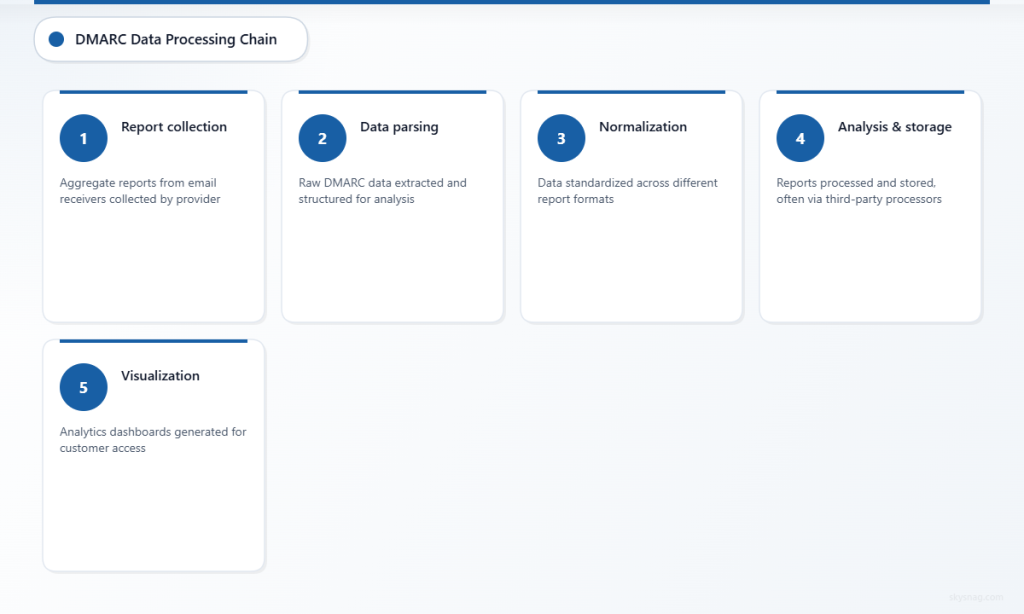
The typical data flow includes report collection, parsing, normalization, analysis, and visualization. Each step may involve different processors, and many providers use cost-effective solutions in regions like the United States or Asia-Pacific, where data protection standards differ significantly from EU requirements.
This processing complexity creates multiple potential exposure points where DMARC data might be accessed, stored, or analyzed by entities not subject to GDPR obligations, even when the primary provider maintains EU operations.
II. Impact: Regulatory and Business Considerations
Privacy Law Implications
Some data protection authorities have pursued cases involving certain types of data transfers to third countries. Organizations using DMARC providers with unclear processor arrangements may face potential compliance scrutiny, particularly in sectors like finance and healthcare where regulators maintain heightened vigilance.
Some enforcement cases have involved regulators examining the entire data processing chain, not just primary vendor relationships. A DMARC provider’s use of non-EU processors creates downstream considerations that organizations should evaluate as part of their privacy compliance program.
Operational Risk Factors
Beyond regulatory considerations, DMARC data exposure creates operational vulnerabilities. Email authentication data reveals information about an organization’s infrastructure, partner relationships, and communication patterns that could be valuable to threat actors or competitors.
Non-EU processors may operate under different legal frameworks that allow government access to data without the protections available under European law. This exposure risk extends to business intelligence that could compromise competitive positioning or security posture.
Organizations subject to additional regulatory requirements, such as NIS2 or sector-specific mandates, face compounded compliance complexity when their DMARC providers cannot guarantee EU-only data processing.
III. Legal Analysis: When DMARC Data May Implicate Privacy Laws
Distinguishing Technical vs. Personal Data Elements
DMARC aggregate reports primarily contain technical domain and IP address information that typically does not constitute personal data under GDPR definitions. However, organizations should assess their specific circumstances to determine if their DMARC data contains elements that could be linked to identifiable individuals.
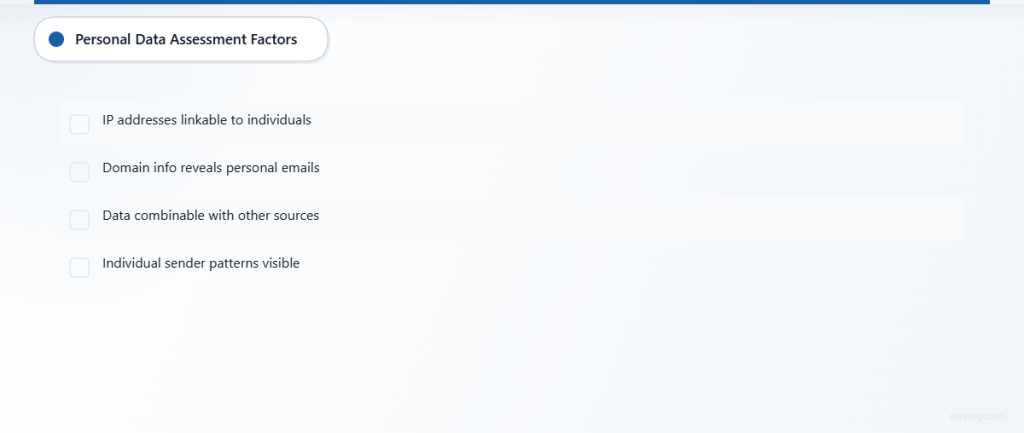
Consider these factors when evaluating privacy implications:
- Whether IP addresses in reports can be linked to specific individuals
- If domain information reveals personal email addresses or individual sender patterns
- Whether additional data sources could be combined with DMARC reports to identify individuals
- The specific technical configuration and data collection practices of your email infrastructure
Risk Assessment for Personal Data Elements
Organizations that determine their DMARC data may contain personal data should implement appropriate privacy protections based on their specific risk profile. This includes evaluating data transfer mechanisms, processor locations, and contractual safeguards.
For purely technical domain and IP information that cannot be linked to individuals, standard data security and vendor management practices may be sufficient, though organizations should still consider operational and competitive risks associated with data exposure.
IV. Prevention: Implementing Privacy-Aware DMARC Solutions
Due Diligence Framework for Provider Selection
Establish a comprehensive evaluation process that examines not just primary provider capabilities, but their entire processing ecosystem. Request detailed data flow documentation that identifies all processors, their locations, and legal bases for data transfers.
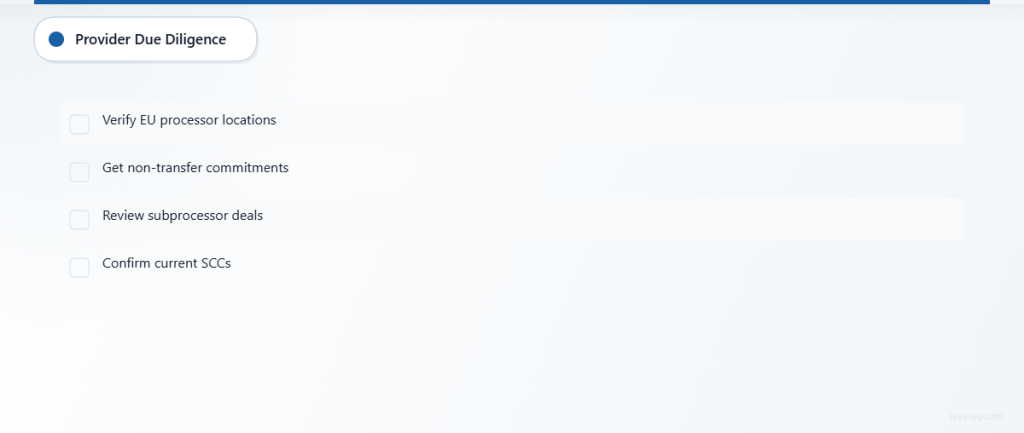
Implement the following due diligence requirements:
- [ ] Verify all data processors maintain operations within the EU or approved adequacy jurisdictions.
- [ ] Obtain binding commitments that DMARC data will not be transferred to non-EU processors without explicit consent.
- [ ] Review all subprocessor agreements and ensure they include adequate privacy protections.
- [ ] Confirm the provider maintains current Standard Contractual Clauses (SCCs) or other valid transfer mechanisms where applicable.
- [ ] Establish notification procedures for any changes to the processing arrangement.
Data Processing Agreements and Controls
Negotiate specific contractual protections that address DMARC data sensitivity and regulatory requirements. Standard data processing agreements often overlook the technical nature of email authentication data and may not provide adequate protection for aggregate report information.
Include explicit restrictions on data location, processor selection, and access controls in your agreements. Require providers to demonstrate technical and organizational measures that prevent unauthorized access to DMARC data by non-EU entities.

Skysnag Comply addresses these privacy concerns by maintaining EU-based infrastructure and providing transparent data processing arrangements that support GDPR compliance requirements. The platform offers detailed audit trails and processor documentation that organizations need for regulatory compliance.
Ongoing Monitoring and Compliance Validation
Implement regular compliance audits that verify provider adherence to agreed processing arrangements. DMARC data flows change as providers scale operations or modify their technical architecture, creating new exposure risks that require ongoing monitoring.
Establish procedures for validating processor locations, reviewing access logs, and confirming that privacy controls remain effective as your DMARC implementation evolves. Many organizations discover processor changes only during routine audits or after compliance incidents occur.
V. Key Takeaways
Organizations with DMARC data that may contain personal data elements should carefully evaluate processor locations and data transfer arrangements to ensure compliance with applicable privacy regulations.
Privacy-compliant DMARC implementation requires explicit contractual protections, ongoing compliance monitoring, and providers that can guarantee appropriate data processing arrangements based on your specific risk profile.
Organizations should evaluate their DMARC providers’ processing arrangements if their specific implementation may involve personal data and assess whether their specific data requires enhanced privacy protections based on the nature and linkability of the information collected.
Ready to implement DMARC with privacy-compliant data processing? Skysnag Comply provides EU-based email authentication services with transparent processor arrangements that support your regulatory compliance requirements.
Want to check if your domain is GDPR compliant and is not sending out sensitive data to non-EU territories? Go to our domain scanner and scan your domain to identify potential privacy compliance risks.