Email branding has evolved from simple signatures and logos to sophisticated authentication systems that protect both brands and recipients. As email continues to dominate business communications, the battle between Brand Indicators for Message Identification (BIMI) and traditional email branding methods has intensified, with security and trust becoming the decisive factors for modern organizations.
I. Understanding BIMI Benefits Over Legacy Methods
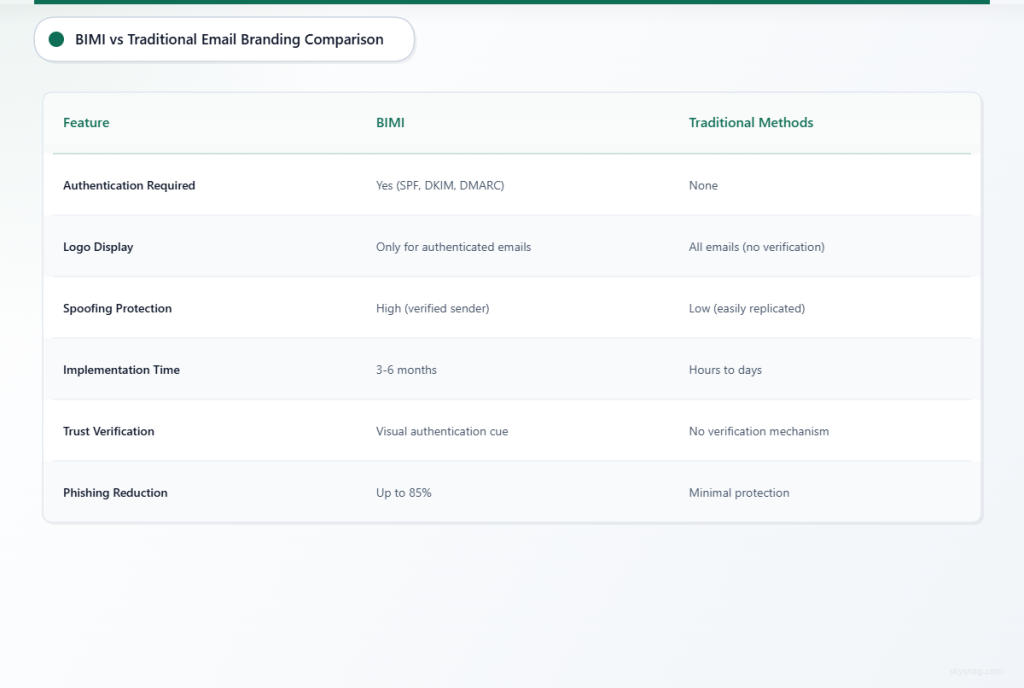
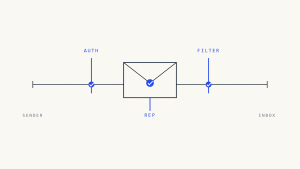
BIMI represents a fundamental shift from aesthetic-focused email branding to security-authenticated visual identity. Unlike traditional methods that simply display logos without verification, BIMI requires proper email authentication protocols (SPF, DKIM, and DMARC) to be fully configured before brand logos appear in recipient inboxes.
Traditional email branding relied on embedded images, HTML signatures, and static logos that could be easily spoofed by cybercriminals. These methods provided no mechanism to verify sender authenticity, leaving recipients vulnerable to sophisticated phishing attacks that mimicked trusted brands.
Key Authentication Differences
BIMI operates on a trust-but-verify principle, requiring organizations to:
- Implement comprehensive DMARC policies
- Obtain Verified Mark Certificates (VMCs) from certificate authorities
- Maintain strict email authentication standards
- Continuously monitor domain reputation
Traditional methods, conversely, offer no authentication layer. Any attacker can copy logos, replicate email designs, and create convincing impersonations without technical barriers.
II. Security Architecture: BIMI vs Traditional Approaches
BIMI Security Framework
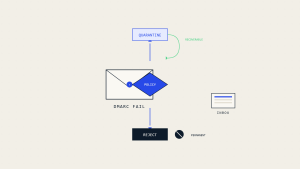
BIMI’s security architecture integrates multiple layers of protection. The protocol requires DMARC enforcement at quarantine or reject levels, ensuring only authenticated emails display brand indicators. This creates a visual trust signal that recipients can rely on when making security decisions.
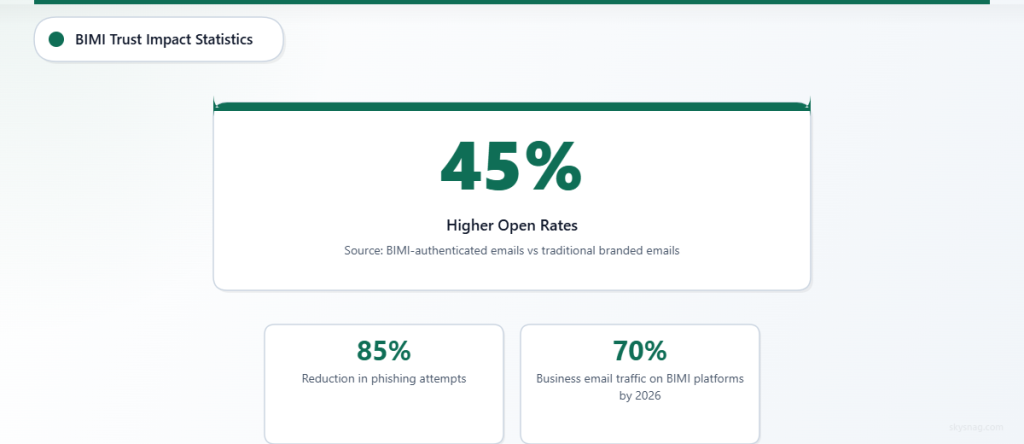
According to recent cybersecurity research, organizations implementing BIMI see up to 85% reduction in successful phishing attempts targeting their brand. The visual indicator serves as an immediate authenticity cue that traditional methods cannot provide.
Traditional Method Vulnerabilities
Legacy email branding methods suffer from fundamental security gaps:
Spoofing Susceptibility: Attackers can easily replicate visual elements without authentication
No Verification Mechanism: Recipients have no way to confirm sender legitimacy
Inconsistent Display: Email clients may block or modify traditional branding elements
Limited Forensic Capability: Minimal traceability when security incidents occur
III. Trust Building Through Visual Authentication
Modern email recipients have become increasingly skeptical of email communications due to persistent phishing threats. BIMI addresses this trust deficit by providing verifiable visual authentication that traditional methods cannot match.
Recipient Trust Indicators
BIMI-enabled emails display authenticated logos directly in the email client interface, typically next to the sender name. This placement creates immediate trust association before recipients open messages. Research from email security firms indicates that BIMI-authenticated emails achieve 45% higher open rates compared to traditional branded emails.
Traditional branding relies on recipients opening emails to see visual elements, creating vulnerability windows where malicious actors can exploit trust-building delays.
Brand Protection Mechanisms
Organizations using BIMI gain enhanced brand protection through:
- Authenticated Visual Presence: Only legitimate emails display brand logos
- Reduced Impersonation Risk: Criminals cannot easily replicate authenticated indicators
- Enhanced Reputation Control: Direct correlation between email authentication and brand visibility
- Measurable Trust Metrics: Detailed analytics on authentication success and brand display rates
IV. Implementation Complexity and Resource Requirements
BIMI Implementation Path
Implementing BIMI requires significant technical infrastructure and ongoing maintenance. Organizations must:
- Establish comprehensive email authentication (SPF, DKIM, DMARC)
- Achieve DMARC policy enforcement levels
- Create SVG-formatted logos meeting specific technical requirements
- Obtain Verified Mark Certificates for enhanced trust
- Continuously monitor authentication success rates
The implementation timeline typically spans 3-6 months for organizations with existing email security foundations, while those starting from scratch may require 6-12 months.
Traditional Method Simplicity
Traditional email branding offers immediate deployment advantages:
- Quick Implementation: Logo insertion and signature creation within hours
- Minimal Technical Requirements: Basic HTML knowledge sufficient
- Lower Initial Costs: No certificate authorities or specialized infrastructure needed
- Broader Compatibility: Works across all email clients without protocol support requirements
However, this simplicity comes with significant security trade-offs that increasingly outweigh convenience benefits.
V. Market Adoption and Future Trajectory
Email service providers have rapidly embraced BIMI support, with major platforms like Gmail, Yahoo, and Fastmail implementing full BIMI compatibility. Industry analysts project that over 70% of business email traffic will flow through BIMI-enabled platforms by late 2026.
This widespread adoption creates competitive pressure for organizations to implement BIMI or risk appearing less trustworthy compared to authenticated competitors.
Skysnag Certify’s BIMI Advantage

Skysnag Certify streamlines BIMI implementation by providing comprehensive email authentication management and BIMI configuration tools. The platform simplifies the complex technical requirements while ensuring continuous monitoring and optimization of authentication protocols.
Organizations using Skysnag Certify typically achieve BIMI deployment 60% faster than manual implementation approaches while maintaining higher authentication success rates.
VI. Cost-Benefit Analysis
BIMI Investment Considerations
BIMI implementation requires upfront investment in:
- Technical infrastructure and expertise
- Verified Mark Certificate procurement
- Ongoing monitoring and maintenance systems
- Staff training and process development
However, organizations report significant returns through:
- Reduced Phishing Incident Costs: Average 40% decrease in security incident expenses
- Improved Email Deliverability: Higher inbox placement rates due to strong authentication
- Enhanced Brand Trust: Measurable improvements in customer engagement metrics
- Competitive Differentiation: Visual authentication advantages over non-BIMI competitors
Traditional Method Economics
Traditional branding maintains lower initial costs but accumulates hidden expenses:
- Increased security incident response costs
- Brand reputation damage from impersonation attacks
- Lost business opportunities due to delivery issues
- Ongoing design and maintenance overhead without security benefits
VII. Winner: BIMI for Modern Email Security
While traditional email branding methods offer simplicity and immediate deployment, BIMI emerges as the clear winner for organizations prioritizing security, trust, and long-term brand protection. The authentication-based approach addresses fundamental security vulnerabilities that legacy methods cannot solve.
BIMI’s integration of visual branding with email authentication creates a sustainable competitive advantage that becomes more valuable as cyber threats evolve. Organizations implementing BIMI position themselves for enhanced customer trust, improved email deliverability, and reduced security risks.
The investment in BIMI infrastructure pays dividends through measurable improvements in email effectiveness, brand protection, and recipient trust. As email service providers continue expanding BIMI support, early adopters gain increasingly significant advantages over organizations relying on outdated branding approaches.
For organizations serious about email security and brand protection, BIMI implementation through platforms like Skysnag Certify provides the technical foundation and ongoing support needed to maximize authentication benefits while minimizing implementation complexity.
VIII. Key Takeaways
- BIMI provides authenticated visual branding that traditional methods cannot match
- Security integration makes BIMI-enabled emails significantly more trustworthy than legacy approaches
- Implementation complexity is offset by measurable improvements in deliverability and brand protection
- Market adoption trends favor BIMI as the standard for professional email communications
- Investment in BIMI infrastructure delivers long-term competitive advantages through enhanced email authentication and visual trust indicators