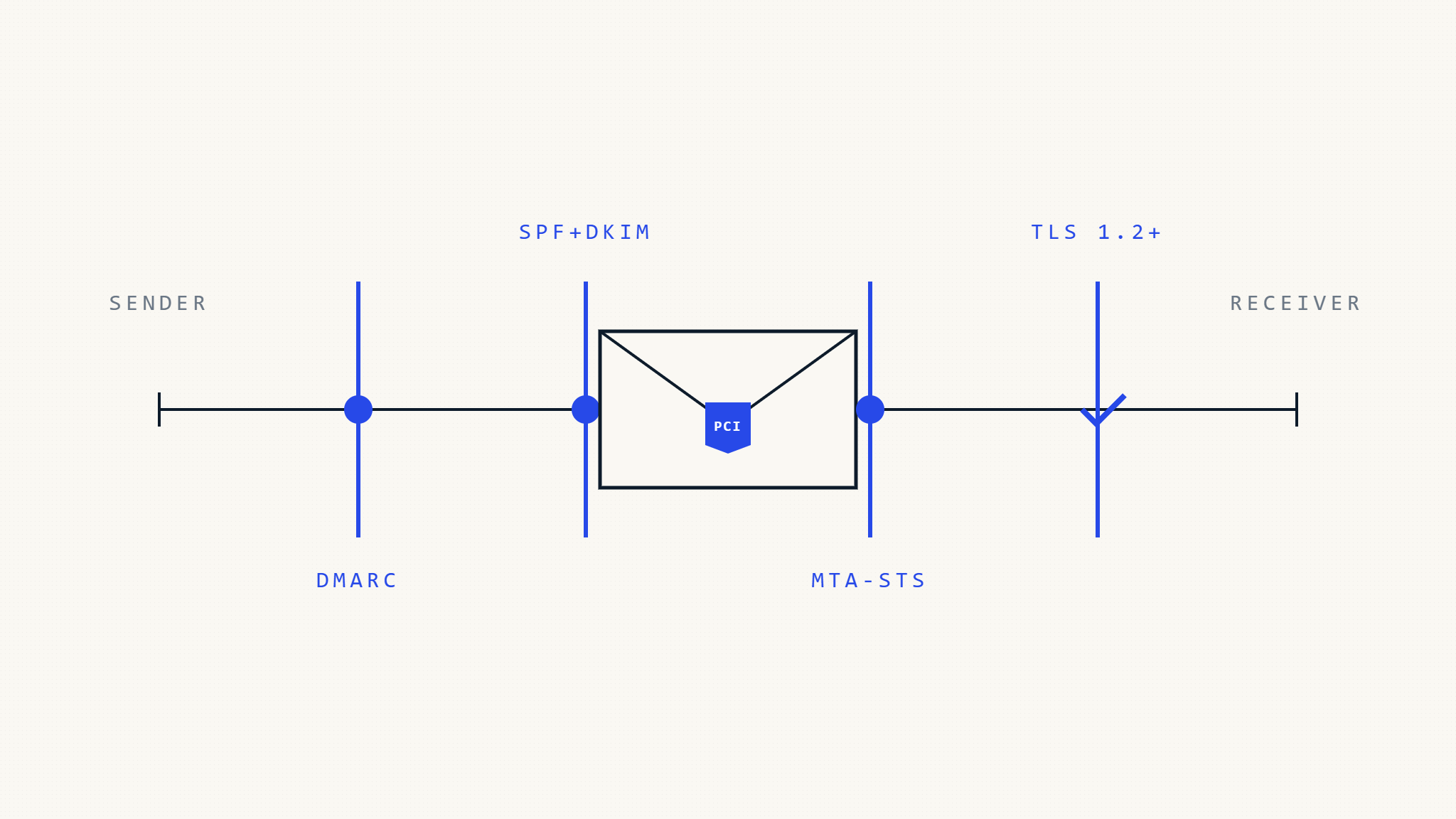
Payment processors operate in one of the most targeted areas of the digital economy. Their emails carry payment confirmations, merchant notifications, billing updates, account alerts, security messages, and operational instructions that customers and partners are expected to trust.
That makes email a critical security channel.
When attackers spoof a payment processor’s domain, impersonate its employees, or abuse similar-looking domains, the damage can go beyond a single phishing attempt. These attacks can affect customer trust, merchant confidence, operational workflows, and the broader security posture of the organization.
DMARC, supported by SPF and DKIM, helps payment processors reduce the risk of exact-domain spoofing by allowing receiving mail servers to identify unauthenticated messages that claim to come from the organization’s domain.
DMARC does not replace PCI DSS controls. It does not directly protect stored cardholder data. It does, however, support anti-phishing, secure communication, access-risk reduction, and incident visibility objectives within a broader PCI DSS control environment.
For payment processors, email authentication should be treated as part of security readiness, not just deliverability hygiene.
I. PCI DSS and Email Security: The Right Framing
PCI DSS focuses on protecting account data and securing the systems, people, and processes that support payment environments.
PCI DSS does not prescribe DMARC, SPF, or DKIM as standalone mandatory technologies in every environment. The standard sets security objectives and expects organizations to implement appropriate controls based on risk, scope, and assessment requirements.
The relevant connection is anti-phishing.
PCI DSS v4.0 introduced requirements for mechanisms that detect and protect personnel against phishing attacks. Email authentication can help support that objective by reducing the ability of attackers to impersonate trusted domains and by giving security teams visibility into spoofing attempts and unauthorized email sources.
The safest way to position DMARC for PCI DSS is:
DMARC supports PCI DSS anti-phishing and secure communication objectives. It should be documented as one control within a layered security program, not presented as a complete PCI DSS solution by itself.
II. Why Payment Processors Need Strong Email Authentication
Payment processors rely heavily on trusted email communication.
Common email flows include:
- Transaction confirmations
- Merchant onboarding messages
- Billing and settlement notices
- Security alerts
- Account verification emails
- Password reset emails
- Regulatory or compliance notices
- Support communications
- Internal finance and operations messages
- Third-party platform notifications
If these messages are spoofed or impersonated, recipients may be tricked into revealing credentials, approving fraudulent changes, clicking malicious links, or trusting false payment instructions.
DMARC helps address one specific but important risk: unauthorized use of the organization’s real domain in the visible From address.
When implemented correctly, DMARC allows domain owners to instruct receiving mail servers on how to treat messages that fail authentication and alignment checks.
III. What DMARC Does and Does Not Do
DMARC protects against exact-domain spoofing.
A message passes DMARC only when at least one of the following is true:
- SPF passes and the SPF-authenticated domain aligns with the visible From domain.
- DKIM passes and the DKIM signing domain aligns with the visible From domain.
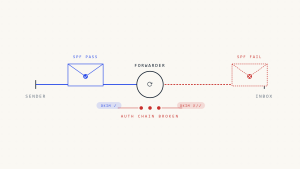
SPF passing alone is not enough. DKIM passing alone is not enough. Alignment is what connects authentication back to the domain the recipient sees.
DMARC does not stop every phishing attack.
It does not prevent lookalike domains from being registered. It does not stop display-name impersonation. It does not guarantee inbox placement. It does not replace employee awareness, secure email gateways, endpoint protection, access controls, or incident response.
For payment processors, DMARC should be used as part of a layered anti-phishing strategy.
IV. How DMARC Supports PCI DSS Anti-Phishing Objectives
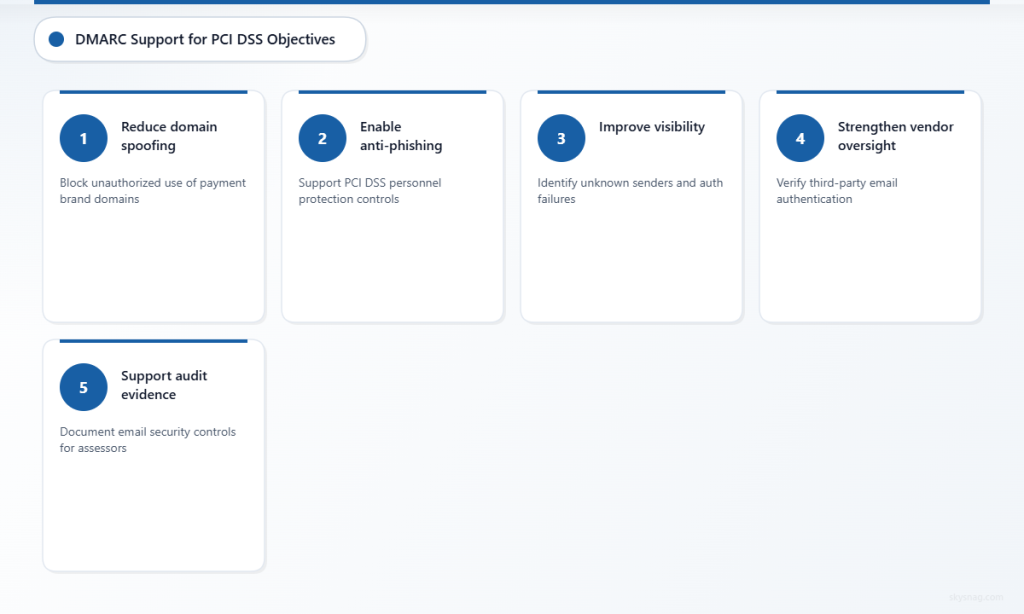
DMARC can support PCI DSS readiness in several practical ways.
Reducing Exact-Domain Spoofing
Attackers often try to send messages that appear to come from trusted payment brands. DMARC enforcement helps receiving systems reject or quarantine unauthenticated messages that misuse the organization’s real domain.
Supporting Anti-Phishing Controls
PCI DSS expects organizations to protect personnel against phishing attacks. DMARC, SPF, and DKIM support this objective by making it harder for attackers to impersonate trusted domains successfully.
Improving Visibility
DMARC aggregate reports show which systems are sending email on behalf of a domain, which sources pass or fail authentication, and where unauthorized activity may be occurring.
This visibility helps payment processors identify:
- Unknown sending sources
- Misconfigured vendors
- Unauthorized IP addresses
- Authentication failures
- Domains still operating without enforcement
- Spoofing attempts against payment-related domains
Strengthening Vendor Oversight
Payment processors often rely on CRMs, ticketing systems, billing tools, marketing platforms, support platforms, and transactional email providers.
DMARC reporting helps identify whether those third-party senders are properly authenticated and aligned.
Supporting Audit Evidence
DMARC implementation can produce useful evidence for security assessments, including:
- DNS records
- Authentication status
- Enforcement policy
- Report analysis
- Sender inventory
- Monitoring procedures
- Incident escalation criteria
This evidence helps demonstrate that email authentication is actively managed as part of the organization’s anti-phishing control environment.
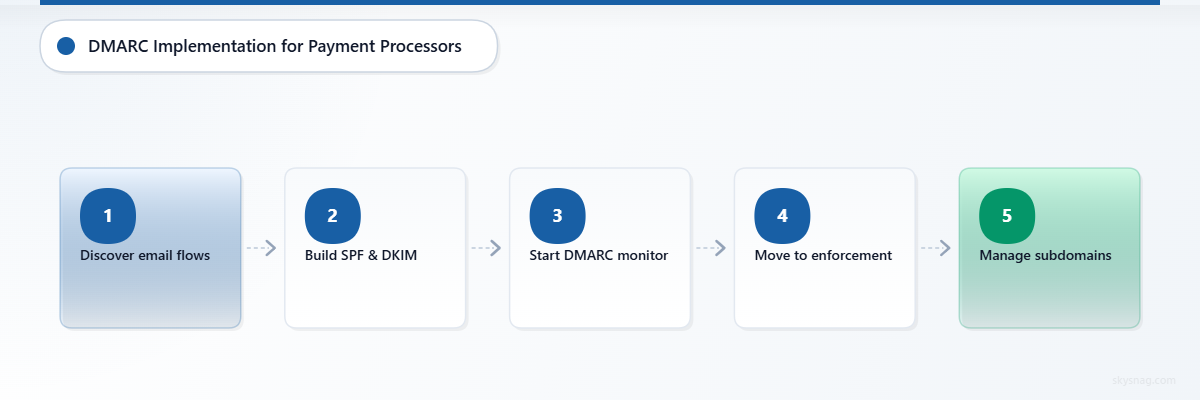
V. Implementation Strategy for Payment Processors
Payment processors should implement DMARC carefully. A rushed enforcement policy can disrupt legitimate email, especially when multiple business units and third-party platforms send on behalf of the organization.
A phased approach is safer.
VI. Phase 1: Email Flow Discovery
Start by identifying every legitimate source that sends email for the domain.
This should include:
- Transactional email systems
- Merchant communication platforms
- Customer support tools
- Billing and invoicing systems
- CRM platforms
- Marketing automation tools
- Regulatory notification systems
- HR and internal communication systems
- Third-party service providers
- Regional or business-unit specific senders
For each sender, document:
- Sending platform
- Sending IPs or includes
- DKIM signing status
- SPF authorization status
- Alignment behavior
- Message volume
- Business owner
- Criticality
- Failure impact
Discovery is the most important phase. Most DMARC enforcement failures happen because legitimate senders were missed.
VII. Phase 2: Build the SPF and DKIM Foundation
DMARC depends on SPF and DKIM.
Before moving toward enforcement, payment processors should make sure legitimate mail can pass aligned SPF or aligned DKIM.
SPF Guidance
SPF should include all authorized sending sources and avoid unnecessary includes.
A simplified example:
v=spf1 ip4:192.0.2.0/24 include:_spf.google.com include:sendgrid.net -allMove toward -all only after legitimate senders are identified and tested. If discovery is incomplete, a hard fail policy can create avoidable delivery issues.
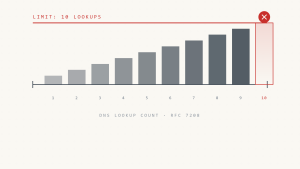
Payment processors should also monitor SPF lookup limits. Overloaded SPF records can fail during evaluation, causing legitimate messages to lose SPF authentication.
DKIM Guidance
DKIM should be enabled across all major email streams, especially customer-facing and business-critical communication.
Recommended practices include:
- Use strong DKIM key lengths, commonly 2048-bit where supported.
- Maintain documented key rotation procedures.
- Confirm DKIM signing for third-party senders.
- Validate alignment with the visible From domain.
- Monitor DKIM failures after platform changes.
For payment processors, DKIM alignment is often more reliable than SPF alignment when mail is routed through third-party services or forwarding paths.
VIII. Phase 3: Start DMARC in Monitoring Mode
Begin with a monitoring policy to collect visibility without affecting delivery.
Example:
v=DMARC1; p=none; rua=mailto:[email protected]At this stage, the goal is to understand the email ecosystem.
Monitor for:
- Legitimate sources passing DMARC
- Legitimate sources failing DMARC
- Unknown or unauthorized senders
- High-volume sources
- Subdomain behavior
- Regional sending patterns
- Third-party platform alignment
- Repeated spoofing attempts
Avoid enabling forensic failure reporting by default. Failure reports can raise privacy, data-handling, and retention concerns. Use them only after legal, privacy, and security review.
IX. Phase 4: Move Toward Enforcement
Once legitimate senders are identified and corrected, payment processors can move toward enforcement.
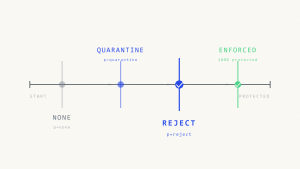
Recommended progression:
p=nonefor discovery and analysis.p=quarantinefor controlled enforcement.p=rejectonce legitimate senders are consistently aligned.
Enforcement should be based on evidence, not guesswork.
Before moving to p=reject, confirm:
- All critical systems pass DMARC.
- Third-party senders are aligned.
- Subdomains are understood.
- Reporting is monitored.
- Emergency rollback procedures exist.
- Business owners approve the change.
- Support teams understand how to handle delivery issues.
X. Subdomain Policy Management
Payment processors often operate many subdomains for portals, support, marketing, applications, developer tools, and regional operations.
A mature DMARC strategy should include subdomain review.
Example:
yourpaymentprocessor.com. IN TXT "v=DMARC1; p=reject; rua=mailto:[email protected]"For subdomains, use explicit records where needed:
portal.yourpaymentprocessor.com. IN TXT "v=DMARC1; p=reject; rua=mailto:[email protected]"For development or non-production domains, avoid sending external email unless required. If they must send, authenticate them properly and monitor them separately.
Payment processors should avoid forgotten subdomains becoming spoofing opportunities.
XI. MTA-STS and TLS-RPT for Transport Security
DMARC protects sender authentication. It does not enforce encrypted transport between mail servers.
MTA-STS and TLS-RPT help address that separate layer.
MTA-STS allows a domain to publish a policy requiring supporting mail servers to use TLS when delivering email to the domain.
Example policy file at:
https://mta-sts.yourpaymentprocessor.com/.well-known/mta-sts.txtExample policy:
version: STSv1
mode: enforce
mx: mail1.yourpaymentprocessor.com
mx: mail2.yourpaymentprocessor.com
max_age: 86400
Corresponding DNS record:
_mta-sts.yourpaymentprocessor.com. IN TXT "v=STSv1; id=20260115T123000"TLS reporting helps monitor delivery issues related to TLS:
_smtp._tls.yourpaymentprocessor.com. IN TXT "v=TLSRPTv1; rua=mailto:[email protected]"For payment processors, DMARC, MTA-STS, and TLS-RPT address different parts of the email trust chain:
- DMARC validates sender authenticity.
- MTA-STS supports encrypted mail transport.
- TLS-RPT provides visibility into TLS delivery failures.
XII. Third-Party Sender Management
Third-party senders are often the most difficult part of DMARC implementation.
Payment processors should maintain a formal sender inventory that includes:
- Vendor name
- Business owner
- Sending domain
- DKIM selector
- SPF include or IP authorization
- DMARC alignment status
- Message type
- Risk rating
- Approval date
- Review date
Vendors should be required to support aligned DKIM where possible.
This is important because SPF can break through forwarding or shared infrastructure. DKIM alignment gives organizations a stronger path to stable DMARC compliance across third-party senders.
Vendor onboarding should include email authentication checks before production sending begins.
XIII. Monitoring and Alerting
DMARC should not be treated as a one-time DNS project.
Payment processors should monitor email authentication continuously.
Important metrics include:
- DMARC pass rate
- SPF alignment rate
- DKIM alignment rate
- Unauthorized source count
- New sender detection
- Failed authentication volume
- Domains still at monitoring-only policy
- Subdomains without coverage
- TLS-RPT failure patterns
- MTA-STS policy errors
Alert conditions may include:
- Sudden increases in DMARC failures
- New unauthorized sources sending as the domain
- Critical vendors failing authentication
- Unexpected geographic sending patterns
- Changes in DKIM alignment
- MTA-STS delivery failures
- DNS record changes affecting authentication
Monitoring should be tied to incident response, not just reporting.
XIV. Incident Response for Email Authentication Failures
Payment processors should define response procedures for email authentication incidents.
A practical response workflow should include:
- Determine whether the issue involves a legitimate sender or an unauthorized source.
- Review DMARC aggregate data for source, volume, receiver, and alignment status.
- Validate SPF, DKIM, and DNS records.
- Confirm whether a vendor changed infrastructure.
- Check whether customer-facing emails are affected.
- Escalate suspected spoofing campaigns to security operations.
- Notify business owners if critical workflows are impacted.
- Document corrective action and timeline.
For suspected spoofing, collect evidence such as headers, source IPs, reporting organization, message samples where available, and affected domains.
For legitimate sender failures, prioritize remediation based on business impact.
XV. Business Continuity Considerations
Email authentication changes can affect operational communication.
Payment processors should maintain emergency procedures for:
- DNS rollback
- Vendor misconfiguration
- Critical email delivery disruption
- Failed DKIM signing
- SPF lookup-limit failures
- DMARC enforcement issues
- MTA-STS policy mistakes
Emergency procedures should include:
- Authorized approvers
- DNS change process
- Rollback records
- Vendor contacts
- Internal escalation paths
- Customer communication process if needed
Enforcement should never depend on one person or an undocumented process.
XVI. Compliance Documentation and Evidence
Payment processors should document DMARC and related email security controls in a way that supports PCI DSS assessments.
Useful evidence includes:
- Current SPF, DKIM, DMARC, MTA-STS, and TLS-RPT records.
- Sender inventory.
- DMARC monitoring procedures.
- Enforcement policy history.
- Report analysis summaries.
- Authentication failure remediation records.
- Vendor email authentication requirements.
- Incident response procedures.
- Security awareness and anti-phishing training records.
- Change management records for DNS and email infrastructure.
- Risk assessment notes linking email authentication to anti-phishing objectives.
The goal is to show that email authentication is implemented, monitored, reviewed, and maintained.
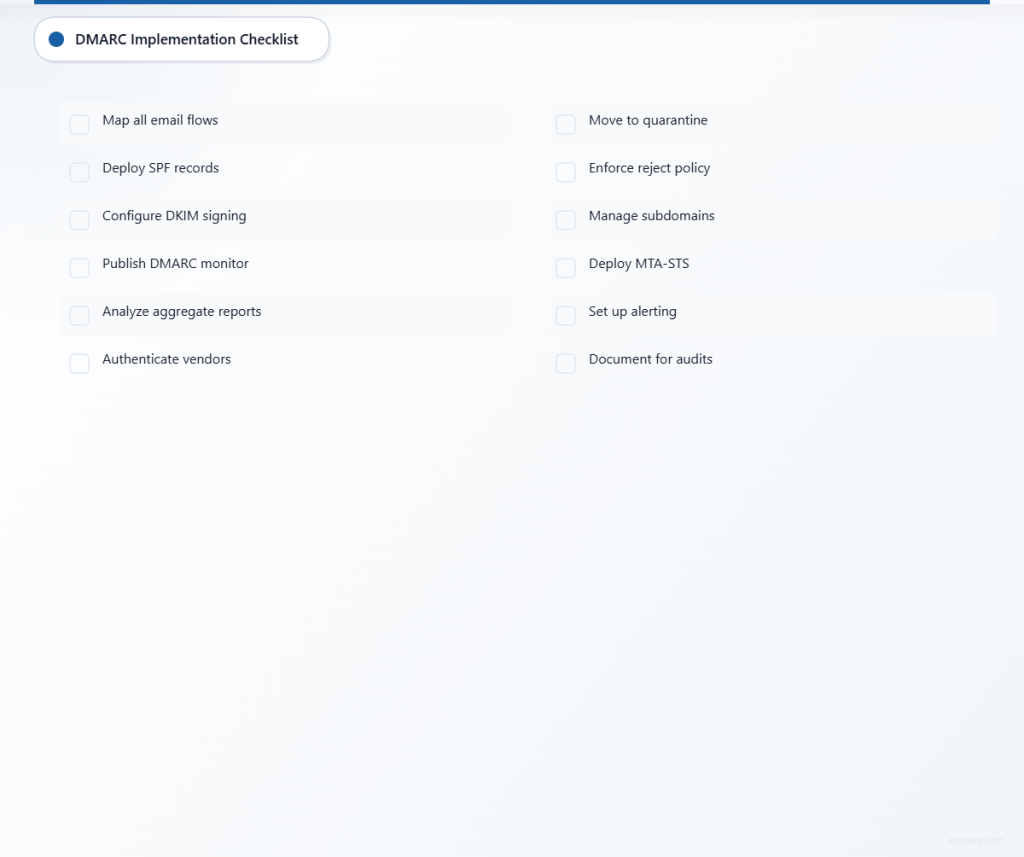
XVII. Implementation Checklist for Payment Processors
Use this checklist as a practical starting point.
- [ ] Identify all domains and subdomains used for payment processor communication.
- [ ] Complete email flow discovery across business units and vendors.
- [ ] Document every third-party sender authorized to send on behalf of the organization.
- [ ] Implement SPF for legitimate senders and review lookup limits.
- [ ] Enable DKIM signing for all critical sending platforms.
- [ ] Validate SPF and DKIM alignment with the visible From domain.
- [ ] Publish a DMARC monitoring policy with aggregate reporting.
- [ ] Review DMARC reports before moving to enforcement.
- [ ] Remediate legitimate senders that fail authentication.
- [ ] Move toward
p=quarantineand thenp=rejectbased on evidence. - [ ] Avoid default forensic reporting unless privacy and legal review approve it.
- [ ] Implement MTA-STS for inbound mail transport security where appropriate.
- [ ] Configure TLS-RPT to monitor mail transport failures.
- [ ] Maintain a sender inventory and vendor review process.
- [ ] Define alert conditions for authentication failures.
- [ ] Establish rollback and incident response procedures.
- [ ] Document how email authentication supports PCI DSS anti-phishing objectives.
- [ ] Review email authentication posture regularly.
XVIII. How Skysnag Protect Helps

Skysnag Protect helps payment processors manage email authentication across domains, senders, and third-party platforms.
The platform supports:
- DMARC monitoring and policy progression.
- SPF and DKIM alignment visibility.
- Legitimate sender identification.
- Unauthorized sender detection.
- Subdomain visibility.
- MTA-STS and TLS-RPT management.
- BIMI readiness where applicable.
- Reporting for security and compliance teams.
- Ongoing visibility into authentication failures and enforcement readiness.
For payment processors, the value is operational control.
Skysnag helps teams understand which senders are legitimate, which sources are failing, which domains are ready for enforcement, and where authentication gaps need attention.
This supports anti-phishing objectives while reducing the manual burden of managing email authentication across complex payment environments.
XIX. Key Takeaways
Payment processors rely on trusted email communication for customer, merchant, operational, and security workflows.
DMARC helps protect against exact-domain spoofing by allowing receiving systems to identify messages that fail authentication and alignment.
PCI DSS does not make DMARC a standalone universal mandate, but DMARC supports anti-phishing and secure communication objectives within a broader PCI DSS control environment.
Successful implementation requires discovery, SPF and DKIM alignment, staged DMARC enforcement, third-party sender management, monitoring, and documentation.
MTA-STS and TLS-RPT add another layer by supporting encrypted mail transport and visibility into TLS delivery issues.
For payment processors, email authentication is not just a deliverability control. It is part of the trust infrastructure that supports secure payment communication.
Ready to strengthen email authentication for payment processor environments? Explore Skysnag Protect.