German organizations face increasingly sophisticated email threats, with phishing attacks targeting German businesses rising by 40% in recent years. The Federal Office for Information Security (BSI) has responded with TR-03182, a comprehensive technical guideline that mandates specific email authentication requirements to protect German critical infrastructure and government entities.
BSI TR-03182 establishes mandatory email security standards that go beyond basic recommendations, requiring organizations to implement robust DMARC policies alongside SPF and DKIM authentication. This framework represents Germany’s most stringent approach to combating email-based cyber threats and ensuring secure digital communication across critical sectors.
I. Understanding BSI TR-03182 Email Security Requirements
What BSI TR-03182 Mandates
BSI TR-03182 (Technical Guideline for Secure Email Systems) sets forth specific requirements for email authentication that German organizations must follow. The framework mandates:
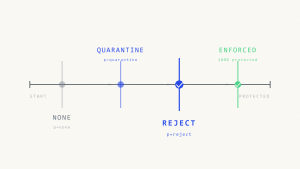
- Mandatory DMARC policy implementation with minimum “quarantine” enforcement
- SPF record configuration with proper alignment mechanisms
- DKIM signing for all outbound email communications
- Regular monitoring and reporting of email authentication failures
- Incident response procedures for email security breaches
The guideline applies primarily to German federal agencies, critical infrastructure operators, and organizations handling sensitive government data. However, many private sector companies are adopting these standards as cybersecurity best practices.
Key Compliance Deadlines and Phases
BSI TR-03182 implementation follows a structured timeline:
Phase 1 (Current): Assessment and planning phase where organizations evaluate existing email security posture and develop implementation roadmaps.
Phase 2 (Mid-2026): Organizations must have SPF and DKIM authentication fully deployed across all email domains.
Phase 3 (End of 2026): DMARC policies must be active with minimum “quarantine” enforcement level, with full monitoring and reporting capabilities operational.
II. Step-by-Step BSI TR-03182 DMARC Implementation
Step 1: Conduct Email Domain Inventory and Assessment
Begin by cataloging all domains that send email on behalf of your organization:
- Primary corporate domains: Main business email addresses
- Subsidiary domains: Separate business units or acquired companies
- Marketing domains: Promotional and campaign-specific domains
- System domains: Automated notifications and alerts
- Legacy domains: Previously used domains that may still send email
Document current authentication status for each domain by checking existing SPF, DKIM, and DMARC records. Use DNS lookup tools to verify what authentication mechanisms are already in place and identify gaps in your current configuration.
Step 2: Configure SPF Records for BSI Compliance
SPF (Sender Policy Framework) configuration must meet BSI TR-03182 specifications:
Create comprehensive SPF records that authorize all legitimate email sources:
v=spf1 include:_spf.google.com include:mailgun.org include:servers.mcsv.net ip4:203.0.113.0/24 -allKey BSI requirements for SPF:
- Use hard fail (-all) mechanism to reject unauthorized senders
- Include all legitimate IP addresses and third-party services
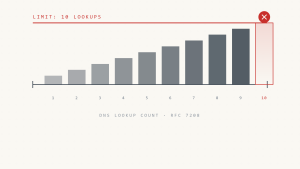
- Limit DNS lookups to maximum of 10 to prevent SPF record failures
- Regularly audit and update SPF records when email infrastructure changes
Step 3: Implement DKIM Signing Infrastructure
DKIM (DomainKeys Identified Mail) provides cryptographic authentication that BSI TR-03182 requires:
Generate DKIM key pairs with minimum 2048-bit RSA encryption:
- Configure your email servers to sign all outbound messages
- Publish DKIM public keys in DNS TXT records
- Establish key rotation procedures for security maintenance
- Ensure third-party email services (marketing platforms, notification systems) are properly configured with DKIM
For organizations using multiple email service providers, coordinate DKIM implementation across all platforms to ensure consistent authentication coverage.
Step 4: Deploy DMARC Policy with BSI-Compliant Settings
DMARC policy deployment must align with BSI TR-03182 enforcement requirements:
Start with a monitoring policy to collect data:
v=DMARC1; p=none; rua=mailto:[email protected]; ruf=mailto:[email protected]; fo=1After validation period, implement quarantine enforcement:
v=DMARC1; p=quarantine; pct=100; rua=mailto:[email protected]; ruf=mailto:[email protected]; fo=1; adkim=s; aspf=sBSI TR-03182 specifically requires:
- Minimum “quarantine” policy enforcement (p=quarantine)
- 100% message coverage (pct=100)
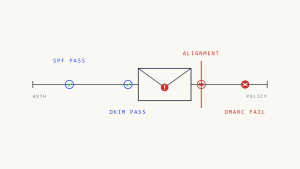
- Strict alignment for both DKIM and SPF (adkim=s; aspf=s)
- Aggregate and forensic reporting enabled
- German-based email addresses for report delivery when possible
Step 5: Establish Monitoring and Reporting Infrastructure
BSI TR-03182 mandates comprehensive monitoring of email authentication performance:

Implement automated DMARC report processing to:
- Parse daily aggregate reports from major email providers
- Identify authentication failures and their sources
- Monitor policy effectiveness and legitimate email delivery
- Generate compliance reports for BSI documentation requirements
Skysnag Protect provides specialized DMARC monitoring capabilities designed for compliance frameworks like BSI TR-03182, offering automated report analysis and compliance tracking specifically tailored for German security requirements.
Step 6: Document Compliance and Incident Response Procedures
BSI TR-03182 requires documented procedures for email security management:
Develop comprehensive documentation covering:
- Email authentication architecture diagrams
- DMARC policy rationale and approval processes
- Incident response procedures for authentication failures
- Regular review schedules for policy updates and security assessments
- Staff training materials on email security best practices
Establish clear escalation procedures for handling email authentication incidents, including communication protocols with BSI when required for critical infrastructure organizations.
III. BSI TR-03182 Monitoring and Maintenance Requirements
Ongoing Compliance Obligations
BSI TR-03182 compliance extends beyond initial implementation to include continuous monitoring obligations:
Monthly Review Requirements:
- Analyze DMARC aggregate reports for authentication trends
- Identify new unauthorized email sources attempting to use your domains
- Validate that legitimate email services maintain proper authentication
- Update SPF and DKIM configurations for infrastructure changes
Quarterly Security Assessments:
- Conduct comprehensive email security posture reviews
- Test DMARC policy effectiveness against simulated phishing attempts
- Review and update incident response procedures
- Validate backup and recovery procedures for email authentication infrastructure
Integration with German Cybersecurity Ecosystem
BSI TR-03182 compliance often intersects with other German cybersecurity requirements:
- IT-Grundschutz integration: Align email security with broader IT security frameworks
- NIS2 Directive compliance: Coordinate email security with European cybersecurity requirements
- Sector-specific regulations: Healthcare, financial services, and energy sectors may have additional requirements
Organizations should coordinate BSI TR-03182 implementation with existing security frameworks to ensure comprehensive coverage without duplicating efforts or creating conflicting policies.
IV. Addressing Common BSI TR-03182 Implementation Challenges
Technical Integration Challenges
Many German organizations face specific technical hurdles when implementing BSI TR-03182:
Legacy System Integration: Older email systems may lack native DMARC support, requiring middleware solutions or system upgrades to achieve compliance.
Multi-Vendor Environment Management: Organizations using multiple email service providers must coordinate authentication across platforms while maintaining centralized policy control.
DNS Management Complexity: Large organizations with distributed DNS management may struggle to maintain consistent SPF and DMARC records across all domains.
Operational and Resource Considerations
BSI TR-03182 compliance requires dedicated resources and expertise:
Allocate sufficient personnel for:
- Initial implementation project management
- Ongoing monitoring and report analysis
- Incident response and troubleshooting
- Regular policy reviews and updates
Consider external expertise for organizations lacking internal email security specialists. Many German cybersecurity consultancies now specialize in BSI TR-03182 compliance and can accelerate implementation while ensuring adherence to technical requirements.
V. Achieving and Maintaining BSI TR-03182 Compliance
BSI TR-03182 represents a significant advancement in German email security standards, requiring organizations to implement comprehensive authentication mechanisms that protect against increasingly sophisticated email threats. Success depends on systematic implementation, continuous monitoring, and integration with broader cybersecurity frameworks.
The framework’s emphasis on mandatory DMARC enforcement, strict alignment requirements, and comprehensive reporting creates a robust defense against email-based attacks while establishing clear accountability for email security management. Organizations that proactively address BSI TR-03182 requirements position themselves as leaders in German cybersecurity compliance.
For streamlined BSI TR-03182 compliance management, Skysnag Protect offers specialized tools designed for German regulatory requirements, providing automated monitoring, compliance reporting, and expert support to ensure ongoing adherence to BSI technical guidelines.
Key Takeaways
- BSI TR-03182 mandates specific DMARC implementation requirements for German organizations, with enforcement deadlines throughout 2026
- Compliance requires systematic deployment of SPF, DKIM, and DMARC with minimum “quarantine” policy enforcement
- Ongoing monitoring and documentation obligations extend beyond initial implementation
- Integration with existing German cybersecurity frameworks ensures comprehensive security coverage
- Professional tools and expertise can significantly accelerate compliance while reducing implementation risks