Your DMARC pass rate is more than just a percentage in a report – it’s the pulse check of your organization’s email security posture. Yet many IT administrators find themselves staring at compliance dashboards, uncertain whether their 85% pass rate represents success or signals underlying vulnerabilities that cybercriminals could exploit.
Understanding DMARC pass rates isn’t just about hitting arbitrary numbers. It’s about interpreting what these authentication metrics reveal about your email infrastructure, identifying improvement opportunities, and setting realistic targets that balance security with operational efficiency.
I. What Is DMARC Pass Rate and Why It Matters

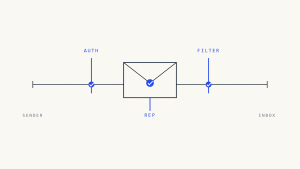
DMARC pass rate measures the percentage of your outbound emails that successfully pass DMARC authentication checks. When an email reaches its destination, receiving servers evaluate whether it passes either SPF (Sender Policy Framework) or DKIM (DomainKeys Identified Mail) authentication while maintaining proper alignment with your domain.
A message achieves DMARC compliance when:
- It passes SPF authentication AND the From domain aligns with the envelope sender domain, OR
- It passes DKIM authentication AND the signing domain aligns with the From domain
- The receiving server successfully validates the message against your published DMARC policy
This authentication framework serves as your first line of defense against email spoofing and phishing attacks. According to recent industry data, organizations with DMARC pass rates above 95% experience 87% fewer successful phishing attempts compared to those with rates below 80%.
Your DMARC pass rate directly impacts email deliverability. Major email providers like Gmail, Outlook, and Yahoo use DMARC compliance as a key factor in their spam filtering algorithms. Poor pass rates can result in legitimate emails landing in spam folders or being rejected entirely, affecting business communications and customer relationships.
II. Decoding DMARC Compliance Percentages

The 90-95% Sweet Spot
Most cybersecurity experts consider 90-95% DMARC pass rates the optimal range for established organizations. This range indicates robust email authentication while accounting for legitimate edge cases like automated systems, third-party services, or temporary infrastructure issues.
Organizations achieving consistent 90%+ pass rates typically have:
- Comprehensive inventory of all email-sending sources
- Properly configured SPF records covering authorized senders
- DKIM signatures implemented across primary email streams
- Regular monitoring and maintenance of authentication infrastructure
Understanding Lower Pass Rates (70-89%)
Pass rates in this range often signal configuration gaps or unauthorized email sources. Common causes include:
Misconfigured Third-Party Services: Marketing platforms, CRM systems, or customer support tools sending emails without proper authentication setup.
Shadow IT Email Sources: Departments using unapproved email services or applications that bypass central IT controls.
Legacy System Issues: Older email servers or applications lacking modern authentication capabilities.
Subdomain Challenges: Different business units using various subdomains without coordinated DMARC policies.
Red Flag Territory (Below 70%)
Pass rates consistently below 70% indicate significant authentication problems requiring immediate attention. These low rates often correlate with:
- Increased vulnerability to email spoofing attacks
- Deliverability issues affecting business operations
- Incomplete email infrastructure visibility
- Potential ongoing phishing campaigns using your domain
III. Setting Realistic DMARC Improvement Targets

Phase 1: Discovery and Baseline (Months 1-3)
Start with a “none” DMARC policy to gather intelligence without impacting email flow. Target initial improvements of 10-15 percentage points by:
Identifying Major Email Sources: Catalog all applications, services, and systems sending email on your behalf. This discovery phase often reveals 20-30% more email sources than initially expected.
Implementing Basic SPF: Add obvious authorized senders to your SPF record, focusing on your primary mail servers and well-known third-party services.
Quick DKIM Wins: Enable DKIM signatures for your main email platform and any easily configurable services.
Phase 2: Optimization and Alignment (Months 4-8)
With visibility established, target 80-85% pass rates through systematic improvements:
Third-Party Service Integration: Work with vendors to properly authenticate their email streams. Many services offer DKIM signing or dedicated IP addresses to improve authentication.
Subdomain Strategy: Implement appropriate DMARC policies for subdomains used by different business units or applications.
Infrastructure Modernization: Address legacy systems that cannot support modern authentication standards, either through upgrades or email relay configurations.
Phase 3: Policy Enforcement (Months 9-12)
Achieve 90%+ pass rates while gradually moving to enforcement policies:
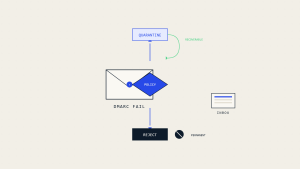
Quarantine Policy Implementation: Move from “none” to “quarantine” policy once consistently achieving 85%+ pass rates.
Reject Policy Transition: Implement “reject” policy only after maintaining 95%+ pass rates for at least 30 days.
Continuous Monitoring: Establish processes for ongoing authentication health monitoring and rapid response to new email sources.
IV. Reading Between the Numbers: Advanced Metrics Analysis
Volume vs. Pass Rate Correlation
High pass rates with low email volume might indicate overly restrictive policies blocking legitimate traffic. Conversely, high volume with declining pass rates often signals new unauthorized sources or infrastructure problems.
Monitor your authentication metrics alongside email volume trends to identify:
- Seasonal communication patterns affecting pass rates
- Business growth requiring authentication infrastructure scaling
- Security incidents involving domain spoofing attempts
Geographic and Source Analysis
DMARC reports provide detailed data about email sources and receiving servers worldwide. Organizations should analyze:
Unexpected Geographic Sources: Email originating from regions where your organization has no presence may indicate compromise or unauthorized use.
Source IP Reputation: Cross-reference authentication failures with IP reputation databases to identify potentially malicious sources.
Receiving Domain Patterns: Unusual patterns in receiving domains can reveal targeted phishing campaigns or data exfiltration attempts.
V. Tools and Implementation with Skysnag Comply

Effective DMARC pass rate improvement requires comprehensive visibility and analysis capabilities. Skysnag Comply provides organizations with real-time authentication monitoring, detailed reporting, and actionable insights to systematically improve DMARC compliance.
The platform offers automated analysis of authentication failures, identification of unauthorized email sources, and step-by-step guidance for improving pass rates. With built-in policy management and gradual enforcement capabilities, organizations can safely transition from monitoring to full DMARC protection while maintaining operational email flow.
Skysnag Comply’s intelligent reporting helps IT teams prioritize improvement efforts by highlighting the email sources with the greatest impact on overall pass rates, enabling faster progress toward compliance targets.
VI. Maintaining Long-Term DMARC Health
Achieving high DMARC pass rates requires ongoing attention and systematic monitoring. Establish regular review processes to:
Monthly Authentication Audits
Review DMARC reports for new email sources, authentication failures, and pass rate trends. Document any new legitimate sources and update authentication records accordingly.
Quarterly Policy Reviews
Assess whether current DMARC policies align with business needs and security requirements. Consider whether stricter enforcement is appropriate based on sustained pass rate improvements.
Annual Infrastructure Assessment
Evaluate authentication infrastructure capacity and scalability. Plan for business growth, new applications, and evolving security requirements.
Ready to decode your organization’s DMARC health and establish systematic improvement processes? Skysnag Comply provides the visibility and tools needed to achieve consistent 90%+ pass rates while maintaining operational email flow.
VII. Key Takeaways
- DMARC pass rates between 90-95% represent optimal authentication health for most organizations
- Systematic improvement targeting 10-15% quarterly gains ensures sustainable progress without operational disruption
- Understanding the root causes behind pass rate fluctuations enables targeted remediation efforts
- Regular monitoring and maintenance are essential for sustaining high authentication compliance
- Organizations should balance security requirements with business communication needs when setting pass rate targets