Managing cybersecurity threats across dozens or hundreds of client environments simultaneously presents unique challenges that traditional single-tenant security solutions simply cannot address. Modern MSPs need sophisticated threat intelligence capabilities that can aggregate, analyze, and act on security data from multiple client infrastructures while maintaining strict tenant isolation and providing actionable insights at scale.
The complexity of multi-client threat monitoring extends far beyond simply deploying the same tools across different environments. Each client brings distinct risk profiles, compliance requirements, and attack surfaces that require nuanced analysis and tailored security responses.
I. The Multi-Tenant Threat Intelligence Challenge
Visibility Gaps Across Client Networks
MSPs typically struggle with fragmented security visibility when managing multiple client environments. Traditional security tools create information silos, making it nearly impossible to identify cross-client attack patterns or coordinated threats targeting multiple customers simultaneously.
Without centralized threat intelligence, security teams spend excessive time context-switching between different client dashboards, miss correlation opportunities between similar attacks, and fail to leverage collective threat insights that could strengthen defenses across their entire client portfolio.
Resource Allocation and Prioritization
Determining which threats require immediate attention becomes exponentially more complex when managing security for multiple organizations. MSPs need systems that can automatically prioritize alerts based on client-specific risk tolerance, compliance requirements, and business criticality while ensuring that high-priority threats across any client environment receive prompt attention.
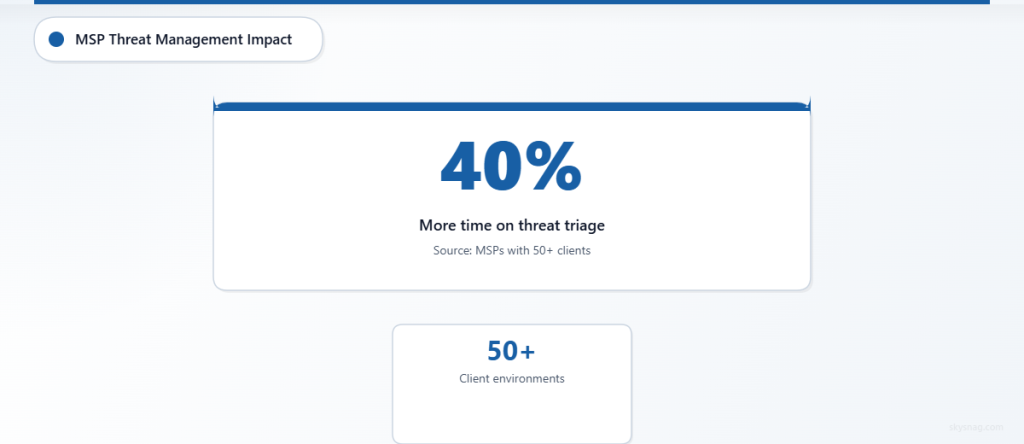
According to recent industry research, MSPs managing 50+ client environments report spending 40% more time on threat triage compared to single-tenant security operations, highlighting the urgent need for automated threat intelligence prioritization.
Compliance and Reporting Complexity
Different clients operate under varying regulatory frameworks, from HIPAA for healthcare organizations to PCI DSS for payment processors. This regulatory diversity requires threat intelligence systems that can automatically categorize and report security incidents according to each client’s specific compliance obligations while maintaining audit trails across all environments.
II. Building Effective Multi-Client Risk Assessment Frameworks
Centralized Threat Data Aggregation
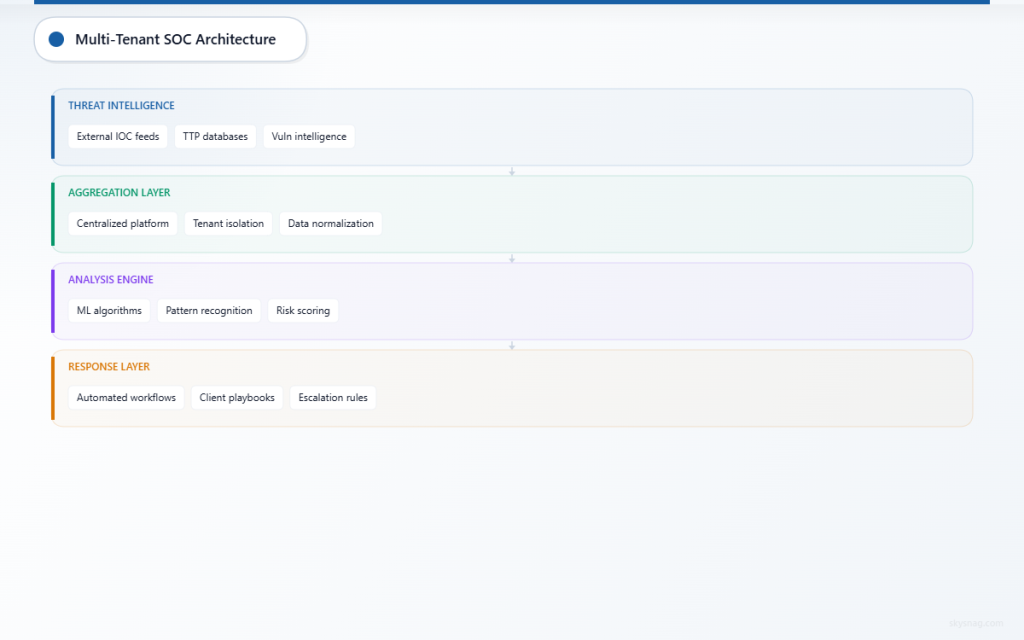
Start by implementing a centralized threat intelligence platform that can ingest security data from all client environments while maintaining strict tenant separation. This foundation enables MSPs to identify attack patterns, track threat actor behaviors, and correlate security events across their entire client base without compromising data isolation requirements.
The aggregation system should normalize threat data from diverse security tools, apply consistent threat classification schemes, and maintain real-time visibility into emerging threats across all managed environments. This approach transforms fragmented security alerts into cohesive threat intelligence that drives proactive security decisions.
Automated Risk Scoring and Prioritization
Develop automated risk scoring mechanisms that evaluate threats based on client-specific criteria including industry vertical, compliance requirements, business impact, and existing security controls. This scoring system should dynamically adjust threat priorities based on real-time context, ensuring that critical vulnerabilities receive appropriate attention regardless of which client environment they affect.
Consider implementing machine learning algorithms that learn from historical incident responses to continuously refine risk scoring accuracy. These systems can identify subtle threat indicators that human analysts might miss while reducing false positive rates across all client environments.
Cross-Client Threat Pattern Recognition
Leverage aggregated threat data to identify attack campaigns targeting multiple clients simultaneously. This capability enables MSPs to implement preventive measures across their entire client portfolio when threats are detected in early stages, significantly improving overall security posture.
Cross-client pattern recognition also helps identify supply chain attacks, coordinated phishing campaigns, and advanced persistent threats that might appear as isolated incidents when viewed through single-client lenses but reveal clear attack patterns when analyzed collectively.
III. Implementing Scalable Threat Monitoring Systems
Multi-Tenant Security Operations Centers
Design security operations centers (SOCs) that can efficiently monitor threats across multiple client environments without compromising response times or security effectiveness. This includes implementing workflow automation, standardized playbooks, and escalation procedures that account for client-specific requirements while maintaining operational efficiency.
Modern multi-tenant SOCs leverage artificial intelligence to automatically categorize threats, assign appropriate response teams, and initiate containment measures according to predefined client policies. This automation reduces response times and ensures consistent security incident handling across all managed environments.
Real-Time Threat Intelligence Feeds
Integrate external threat intelligence feeds with internal security data to provide comprehensive threat context for all client environments. These feeds should include indicators of compromise (IOCs), tactics, techniques, and procedures (TTPs), and vulnerability intelligence that can be automatically correlated with client-specific security events.
The integration process should filter threat intelligence based on client relevance, automatically updating security controls and monitoring systems when new threats are identified. This proactive approach helps prevent attacks before they impact client operations.
Automated Incident Response Coordination
Develop automated incident response systems that can simultaneously coordinate security responses across multiple affected client environments. These systems should maintain communication channels with client stakeholders, automatically generate incident reports, and track remediation progress according to each client’s specific requirements.
Automated response coordination becomes particularly valuable during widespread security incidents affecting multiple clients, enabling MSPs to implement consistent containment measures while providing tailored communication to each affected organization.
IV. Client-Specific Customization and Reporting
Tailored Threat Intelligence Dashboards
Create customized threat intelligence dashboards for each client that highlight relevant security metrics, threat trends, and risk indicators specific to their industry and operational environment. These dashboards should provide executive-level summaries alongside detailed technical information for IT teams.
Dashboard customization should include industry-specific threat intelligence, compliance-relevant security metrics, and risk indicators aligned with each client’s business objectives. This tailored approach ensures that threat intelligence directly supports client decision-making processes.
Regulatory Compliance Integration
Integrate compliance monitoring directly into threat intelligence workflows, automatically flagging security incidents that require regulatory reporting and maintaining audit trails according to applicable standards. This integration reduces compliance overhead while ensuring that all reporting requirements are consistently met.
The system should automatically generate compliance reports in formats required by different regulatory bodies, track remediation timelines, and provide evidence of security control effectiveness across all client environments.
Predictive Risk Analytics
Implement predictive analytics capabilities that can forecast potential security risks based on historical threat data, industry trends, and client-specific risk factors. These analytics help MSPs proactively strengthen security controls and communicate potential threats before they materialize.
Predictive models should account for seasonal threat variations, emerging attack vectors, and client business changes that might impact security posture. This forward-looking approach enables proactive security investments and risk mitigation strategies.
V. Leveraging Technology for Scale and Efficiency
Cloud-Native Security Platforms
Deploy cloud-native security platforms designed specifically for multi-tenant environments, providing the scalability and flexibility needed to support growing client portfolios. These platforms should offer API-driven integration capabilities, automated scaling, and built-in tenant isolation features.
Cloud-native architectures enable MSPs to rapidly deploy security services to new clients while maintaining consistent service quality and security standards across all managed environments. This scalability becomes crucial as MSP client portfolios continue expanding.
Integration with Email Security Platforms
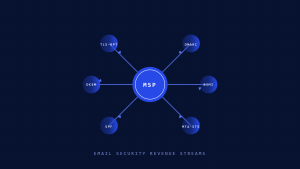

Email remains a primary attack vector across all client environments, making robust email security integration essential for comprehensive threat intelligence. Platforms like Skysnag MSP/MSSP Comply provide centralized email authentication management across multiple client domains, enabling MSPs to monitor and prevent email-based threats at scale.
Email security integration should include automated DMARC policy management, phishing detection, and brand protection services that work seamlessly across all client environments. This comprehensive approach significantly reduces successful email-based attacks while simplifying management overhead.
Machine Learning and AI Integration
Incorporate machine learning algorithms that can automatically identify threat patterns, reduce false positives, and improve incident response efficiency across all client environments. These AI systems should continuously learn from security events to provide increasingly accurate threat detection and risk assessment capabilities.
Machine learning integration enables MSPs to maintain high-quality security services even as client portfolios scale, automatically adapting to new threat landscapes and client-specific risk profiles without requiring proportional increases in security analyst resources.
VI. Measuring Success and Continuous Improvement
Key Performance Indicators for Multi-Client Security
Establish comprehensive KPIs that measure threat intelligence effectiveness across multiple dimensions including detection accuracy, response times, client satisfaction, and overall risk reduction. These metrics should provide insights into both operational efficiency and security effectiveness.
Success metrics should include mean time to detection (MTTD), mean time to response (MTTR), false positive rates, and client security posture improvements. Regular analysis of these metrics enables continuous optimization of threat intelligence capabilities.
Client Communication and Transparency
Develop clear communication protocols that keep clients informed about relevant threats, security improvements, and risk management activities without overwhelming them with technical details. This communication should be tailored to different stakeholder levels within each client organization.
Transparent reporting builds client trust and demonstrates the value of managed security services, supporting long-term client relationships and business growth. Regular security briefings and customized reports help clients understand their security posture and make informed risk management decisions.
VII. Key Takeaways
Effective MSP threat intelligence requires sophisticated systems that can aggregate, analyze, and act on security data across multiple client environments while maintaining strict tenant isolation and regulatory compliance. Success depends on implementing centralized platforms that provide real-time visibility, automated risk prioritization, and coordinated incident response capabilities.
The most successful MSPs leverage cloud-native security platforms, integrate comprehensive email security solutions, and use machine learning to scale their threat intelligence capabilities efficiently. By focusing on automated processes, predictive analytics, and client-specific customization, MSPs can deliver superior security outcomes while maintaining operational efficiency.
Continuous measurement and improvement of threat intelligence capabilities ensures that MSPs stay ahead of evolving threat landscapes while providing increasing value to their client portfolios. The investment in sophisticated multi-tenant threat intelligence systems pays dividends through improved security outcomes, enhanced client satisfaction, and sustainable business growth.
Ready to transform your MSP’s threat intelligence capabilities? Discover how Skysnag’s multi-tenant security platform can streamline your security operations across all client environments while delivering superior threat detection and response capabilities.