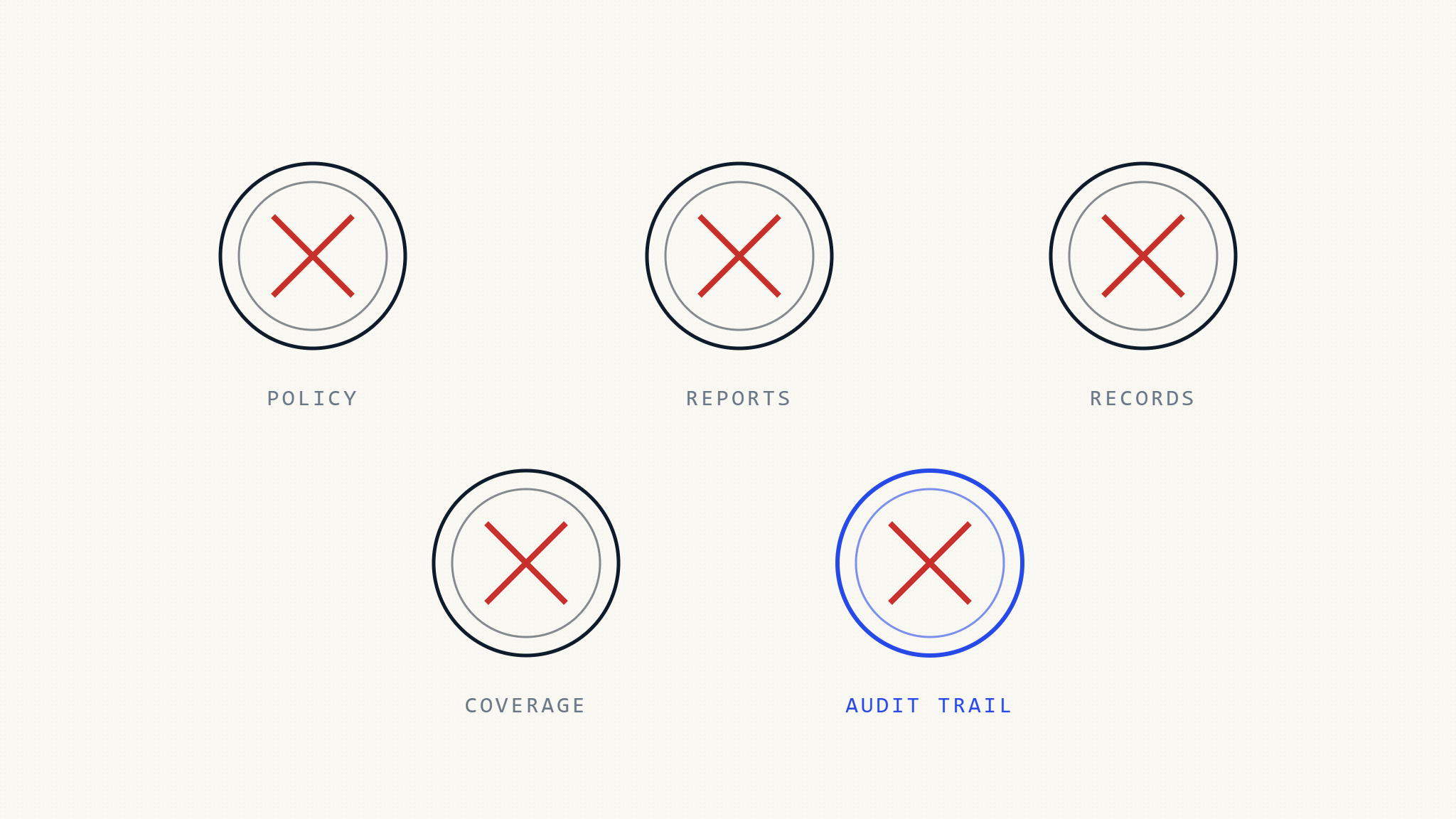
Email authentication compliance has become a high-stakes game for managed service providers. While most MSPs successfully implement basic SPF and DKIM controls, critical regulatory gaps often slip through the cracks gaps that can expose both MSPs and their clients to compliance violations and security incidents.
The challenge isn’t just technical implementation; it’s understanding where authentication systems fail silently and how these failures translate to regulatory exposure. A DMARC policy at “p=none” might appear functional in monitoring dashboards while providing zero protection against domain spoofing—a gap that becomes costly during compliance audits.
I. Gap 1: Misunderstanding DMARC Policy Requirements
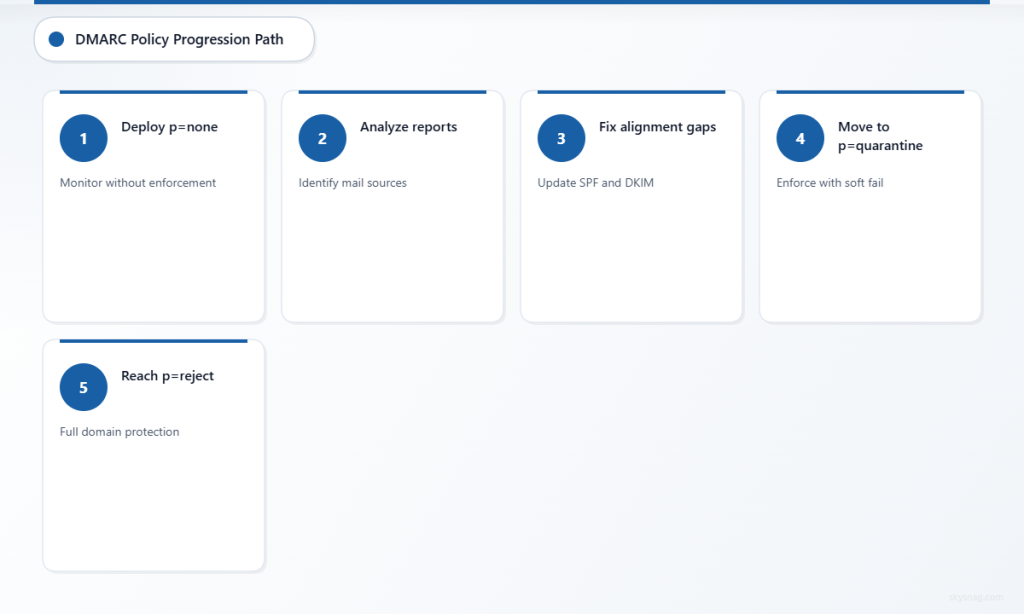
The Mistake: Many MSPs treat DMARC implementation as a binary success when basic monitoring is active, regardless of policy enforcement level.
Why This Fails: DMARC at “p=none” provides visibility but no protection. When compliance frameworks emphasize anti-phishing controls, auditors examine whether email authentication actually prevents spoofing attempts, not just whether it’s technically configured.
Compliance Impact: Organizations subject to frameworks emphasizing data protection and anti-phishing measures need demonstrable email security controls. A monitoring-only DMARC policy may fail to satisfy auditor expectations for preventive controls.
Common Failure Conditions:
- Policy remains at “p=none” indefinitely due to legitimate mail flow concerns
- DMARC passes authentication checks but fails alignment requirements
- Subdomain policies aren’t explicitly configured, leaving gaps in coverage
What MSPs Should Do:
- [ ] Document the business justification for any DMARC policy below “p=reject” in client files.
- [ ] Establish clear timelines for policy progression from “p=none” to enforcement levels.
- [ ] Implement subdomain-specific DMARC policies where organizational email originates from multiple subdomains.
- [ ] Create compliance documentation showing how email authentication controls support client regulatory requirements.
II. Gap 2: Third-Party Email Service Blind Spots
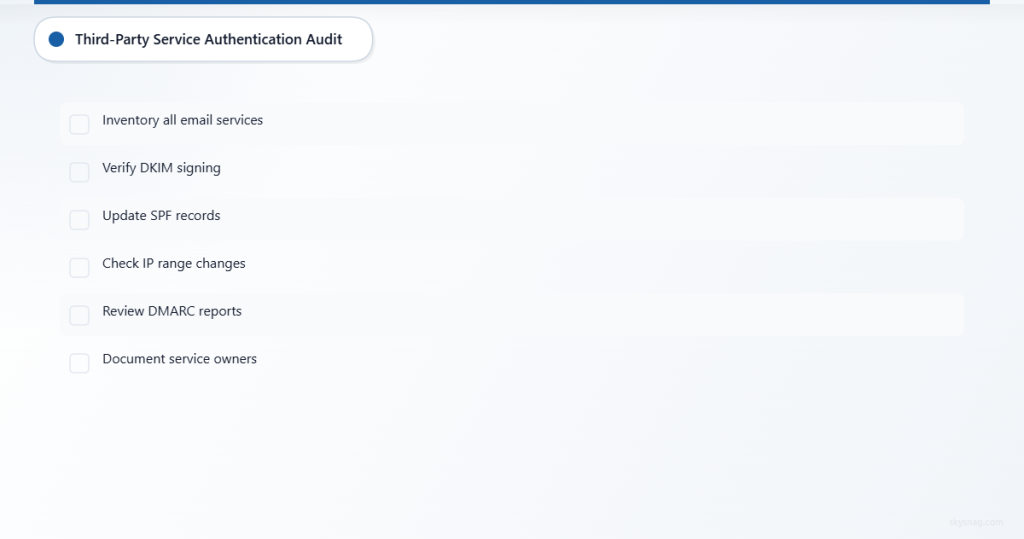
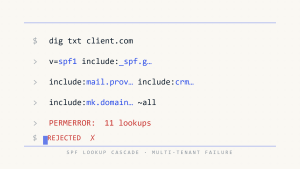
The Mistake: Assuming that popular email services (marketing platforms, CRMs, HR systems) handle authentication automatically without MSP oversight.
Why This Fails: Third-party services often send email using client domains without proper authentication setup. These services may have DKIM signing capabilities but require manual configuration that’s easily overlooked during initial setup or service migrations.
Compliance Impact: Unauthenticated emails from legitimate business services can trigger DMARC failures, creating gaps in audit trails and potentially impacting business communications during compliance-sensitive periods.
Common Failure Conditions:
- Marketing platforms send using client domains without DKIM signing enabled
- New third-party services are added without updating SPF records
- Service provider IP ranges change without notification, breaking SPF validation
- Shadow IT services bypass MSP oversight entirely
What MSPs Should Do:
- [ ] Maintain a comprehensive inventory of all third-party services sending email on behalf of clients.
- [ ] Establish change management procedures for any new email-sending services.
- [ ] Configure DMARC reporting to identify unauthorized email sources before they impact compliance.
- [ ] Create client agreements requiring MSP approval for any new email-sending services.
III. Gap 3: Incomplete BIMI Implementation for Brand Protection
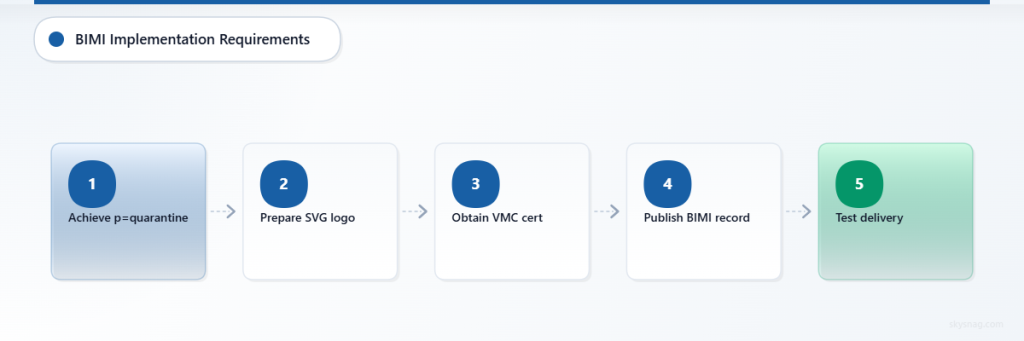
The Mistake: Treating BIMI (Brand Indicators for Message Identification) as optional rather than part of a comprehensive email security and compliance strategy.
Why This Fails: While BIMI isn’t universally required by specific compliance frameworks, it represents a measurable brand protection control that demonstrates organizational commitment to email security. More critically, BIMI requires DMARC at enforcement levels, creating a forcing function for proper authentication.
Compliance Impact: Organizations in sectors where brand protection and customer trust are regulatory considerations may find BIMI implementation supports broader compliance objectives around reputation management and fraud prevention.
Common Failure Conditions:
- BIMI setup attempted without achieving DMARC “p=quarantine” or “p=reject” prerequisites
- SVG logo files don’t meet strict BIMI specifications
- Verified Mark Certificate (VMC) procurement timelines aren’t planned appropriately
- Brand guidelines conflict with BIMI technical requirements
What MSPs Should Do:
- [ ] Evaluate BIMI implementation as part of comprehensive email security strategy for brand-sensitive clients.
- [ ] Ensure DMARC policy enforcement prerequisites are met before beginning BIMI deployment.
- [ ] Coordinate with client marketing teams early in the process to address logo format requirements.
- [ ] Document BIMI implementation as evidence of proactive brand protection measures.
IV. Gap 4: Monitoring and Incident Response Deficiencies
The Mistake: Implementing email authentication without establishing systematic monitoring and incident response procedures for authentication failures.
Why This Fails: Email authentication generates significant data through DMARC reports, but this data becomes compliance-relevant only when it’s systematically analyzed and acted upon. Authentication failures that go unaddressed can indicate ongoing security incidents or compliance gaps.
Compliance Impact: Frameworks emphasizing continuous monitoring and incident response expect organizations to demonstrate systematic security event analysis. DMARC reports contain security-relevant data that auditors may examine during compliance assessments.
Common Failure Conditions:
- DMARC reports are collected but never systematically analyzed
- Authentication failures from legitimate sources go unresolved for extended periods
- Incident response procedures don’t include email authentication failure scenarios
- Forensic reporting isn’t configured to provide detailed incident analysis data
What MSPs Should Do:
- [ ] Establish systematic DMARC report analysis procedures with defined review frequencies.
- [ ] Create incident response playbooks specifically for email authentication failures.
- [ ] Configure forensic reporting (ruf) for detailed analysis of authentication failures.
- [ ] Document authentication monitoring procedures as part of client security operations evidence.
- [ ] Set up alerting for significant increases in authentication failures that might indicate attacks.
V. Gap 5: Cross-Client Domain Security Risks
The Mistake: Managing email authentication for multiple clients without considering cross-client security implications and potential domain confusion.
Why This Fails: MSPs often manage domains with similar naming patterns or related businesses, creating opportunities for domain confusion attacks that exploit trust relationships. Additionally, shared infrastructure configurations can create authentication dependencies between clients.
Compliance Impact: When multiple clients operate in regulated industries, domain security incidents affecting one client can have compliance implications for others, particularly if shared infrastructure or similar domain patterns are involved.
Common Failure Conditions:
- Similar client domain names enable convincing spoofing attacks between clients
- Shared email infrastructure creates single points of authentication failure
- Domain renewal and DNS management practices aren’t consistently applied across clients
- Client-specific authentication policies aren’t properly isolated
What MSPs Should Do:
- [ ] Implement client isolation practices for email authentication infrastructure and DNS management.
- [ ] Identify and document domain similarity risks between clients, especially those in the same industry sectors.
- [ ] Establish separate authentication monitoring and reporting for each client to prevent cross-contamination.
- [ ] Create domain security incident response procedures that consider multi-client environments.
- [ ] Ensure DNS management practices include appropriate access controls and change logging for compliance purposes.
VI. Actions MSPs Can Take Today
Assessment Phase
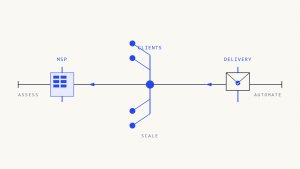

Start by conducting a comprehensive email authentication audit across your client portfolio. Skysnag MSP/MSSP Comply provides multi-tenant visibility into authentication status, policy enforcement levels, and compliance gaps across managed domains.
Document current authentication states, identify clients with enforcement-level policies, and map third-party email services for each organization. This baseline assessment reveals which compliance gaps represent immediate risks versus longer-term optimization opportunities.
Implementation Priorities
Focus first on clients in regulated industries or those approaching compliance audit periods. These organizations typically have the strongest business justification for moving beyond monitoring-only DMARC policies and implementing comprehensive email authentication.
Establish standardized procedures for onboarding new email-sending services, including authentication requirements and testing procedures. Create client communication templates explaining why certain authentication measures support their compliance objectives.
Automation and Monitoring
Implement systematic DMARC report analysis to identify authentication failures that might indicate security incidents or configuration drift. Set up alerting for significant policy violations or new unauthorized email sources.
Create compliance reporting templates that demonstrate how email authentication controls support client regulatory requirements. Document authentication monitoring as part of managed security services evidence.
VII. Key Takeaways
Email authentication compliance gaps often arise from implementation practices that work technically but fall short of regulatory expectations. MSPs must move beyond basic SPF and DKIM setup to address policy enforcement, third-party integration risks, and systematic monitoring requirements.
The most critical gap is treating DMARC monitoring as sufficient when compliance frameworks expect demonstrable protection against email-based attacks. Policy progression from “p=none” to enforcement levels requires careful planning but represents a measurable compliance improvement.
Successful MSPs integrate email authentication into broader compliance and security operations, rather than treating it as a standalone technical implementation. This approach provides better client outcomes and stronger audit evidence when compliance assessments occur.
Ready to eliminate email authentication compliance gaps across your client portfolio? Skysnag MSP/MSSP Comply provides the multi-tenant visibility and automated monitoring needed to maintain consistent authentication standards at scale.