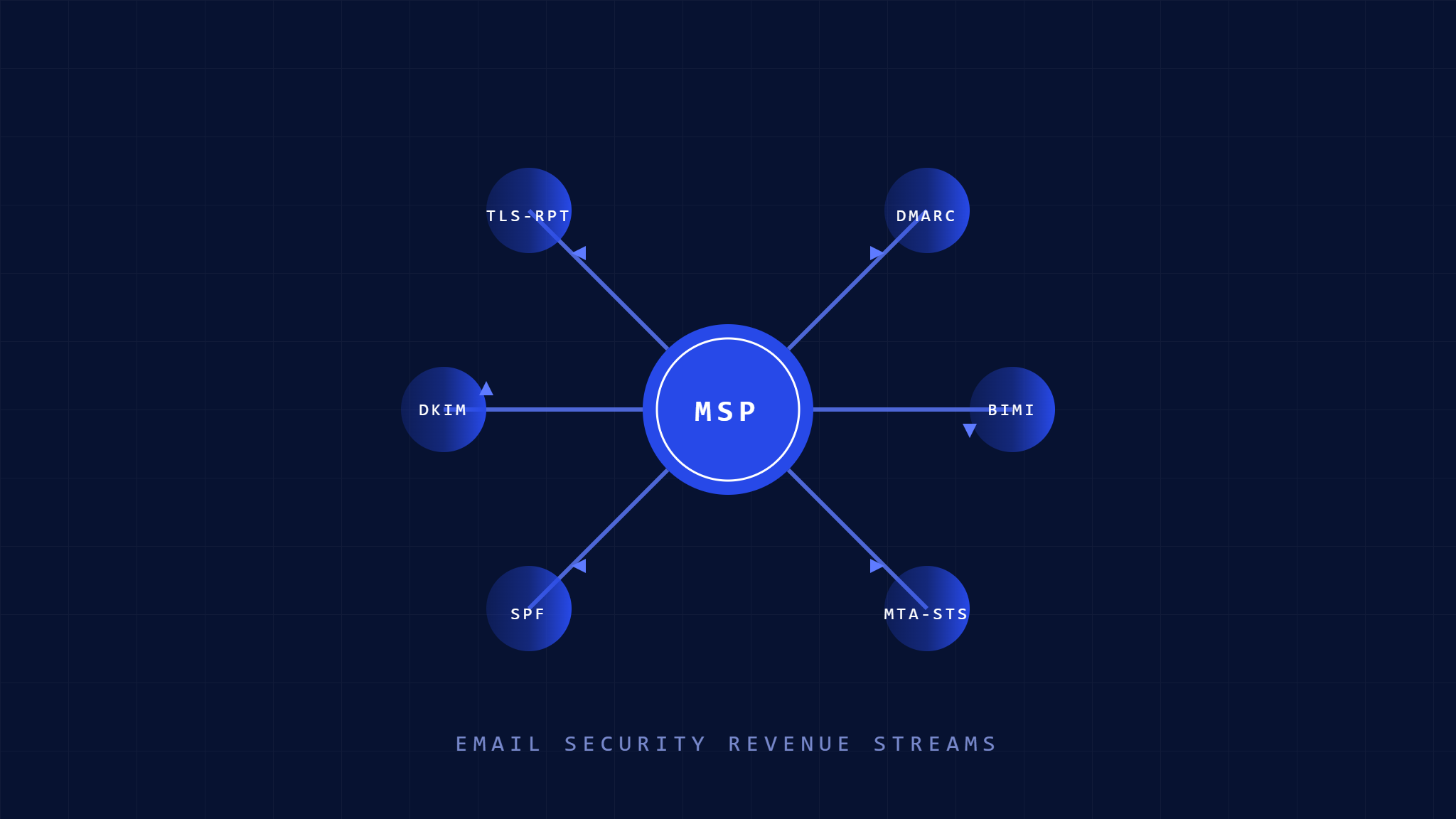
Managed Service Providers (MSPs) face a critical business decision as cyber threats continue to evolve and regulatory compliance requirements tighten. Email remains the primary attack vector for cybercriminals, with email-based threats affecting MSPs’ clients across every industry vertical. Building a comprehensive email security practice isn’t just about protecting clients anymore it’s become essential for MSP business growth, client retention, and competitive differentiation.
The question isn’t whether MSPs should offer email security services, but how quickly they can establish expertise and deliver measurable results to their client base.
I. The Business Case for MSP Email Security Services
Market Demand Driving Revenue Opportunities
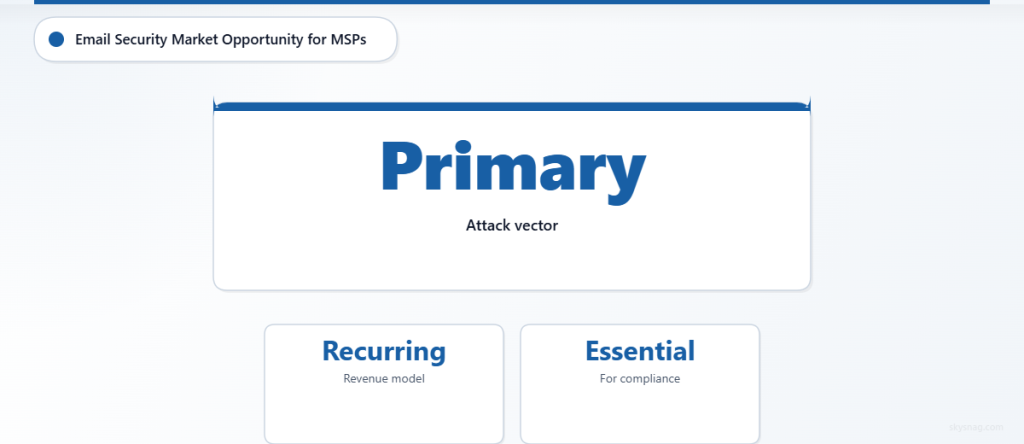
The email security market continues to expand as organizations recognize that traditional perimeter defenses aren’t sufficient against sophisticated phishing attacks, business email compromise (BEC), and domain spoofing campaigns. MSPs are uniquely positioned to address this gap, offering specialized expertise that many small and mid-sized businesses lack internally.
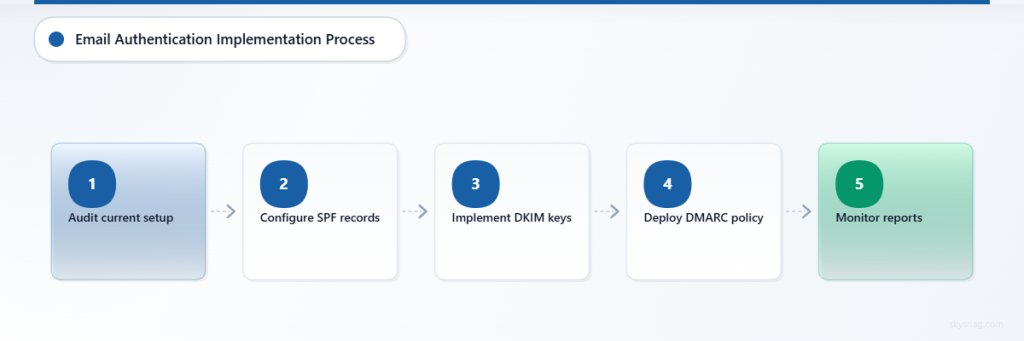
Email authentication services represent a particularly attractive opportunity because they address fundamental security gaps while supporting compliance initiatives. Organizations across industries need help implementing SPF, DKIM, and DMARC protocols correctly, monitoring email authentication performance, and maintaining ongoing protection against domain abuse.
The recurring revenue model aligns naturally with MSP business structures. Email security requires continuous monitoring, policy adjustments, and threat response—services that translate into predictable monthly recurring revenue (MRR) streams.
Client Retention Through Proactive Security
MSPs that establish email security expertise often see improved client relationships and reduced churn. When clients experience email-related security incidents, they frequently question whether their MSP is providing adequate protection. Proactive email security services demonstrate value before problems occur.
Email authentication services also generate detailed reporting and analytics that help MSPs articulate their value to clients. DMARC reports, for example, provide concrete evidence of blocked attacks and protected brand reputation—metrics that resonate with business stakeholders beyond IT departments.
Competitive Differentiation in Saturated Markets
As the MSP market becomes increasingly competitive, specialized security services help providers differentiate their offerings. Generic IT support services become commoditized over time, but security expertise—particularly in emerging areas like email authentication—creates barriers to client switching.
MSPs with established email security practices can command premium pricing for their expertise while building deeper relationships with client security and compliance teams.
II. Current Threat Landscape Impacting MSP Clients
Business Email Compromise Targeting SMBs
Business email compromise attacks have become increasingly sophisticated, targeting the exact client segments that MSPs serve most frequently. These attacks bypass traditional email security solutions by using social engineering rather than malware, making them particularly challenging for organizations without dedicated security staff.
MSPs observe these attacks across their client base, but many lack the specialized tools and expertise needed to implement effective countermeasures. Email authentication provides a foundational defense against domain spoofing and impersonation attacks that enable BEC campaigns.
Supply Chain Security Concerns
MSPs themselves have become attractive targets for cybercriminals seeking to compromise multiple organizations through a single attack. Email-based attacks against MSP infrastructure can provide access to numerous client environments, amplifying the impact of successful breaches.
Implementing robust email security controls protects both MSP operations and client environments, reducing the risk of supply chain compromises that could damage MSP reputation and client relationships.
Compliance Pressure Across Industries
Clients across multiple industries face increasing regulatory pressure to implement specific security controls. While most compliance frameworks don’t explicitly mandate particular email authentication protocols, they emphasize protecting against unauthorized access and maintaining data confidentiality—objectives that email security directly supports.
MSPs that understand the relationship between email authentication and compliance requirements can position these services as essential components of broader compliance programs.
III. Implementation Challenges MSPs Face
Technical Complexity and Expertise Gaps
Email authentication implementation requires specialized knowledge that many MSPs haven’t developed. SPF record configuration, DKIM key management, and DMARC policy optimization involve technical details that differ significantly from traditional network and system administration.
The learning curve can be steep, particularly for MSPs accustomed to more standardized technology implementations. Email authentication requires understanding DNS configuration, email flow analysis, and threat intelligence interpretation.
Resource Allocation and Service Delivery
Establishing an email security practice requires dedicated resources for training, tooling, and ongoing service delivery. MSPs must balance investment in new service areas against existing client commitments and established revenue streams.
The operational requirements for email security monitoring and incident response differ from typical MSP service models. Email threats require faster response times and more specialized analysis than many infrastructure issues.
Client Education and Buy-in
Many MSP clients don’t fully understand email security risks or the business value of authentication controls. Educating clients about threats like domain spoofing and the importance of DMARC enforcement requires security expertise that extends beyond technical implementation.
MSPs must develop messaging and presentation capabilities that help business stakeholders understand the return on investment for email security services.
IV. Service Portfolio Integration Strategies
Layered Security Approach
Email authentication services integrate naturally with existing MSP security offerings. Organizations that implement endpoint detection and response (EDR) solutions, security awareness training, and network monitoring benefit from complementary email security controls that address attack vectors these other solutions might miss.
MSPs can position email authentication as a foundational security control that enhances the effectiveness of other security investments. When clients understand how email security supports their broader security strategy, they’re more likely to invest in comprehensive protection.
Compliance Service Bundling
Many MSP clients need help addressing compliance requirements across multiple frameworks. Email authentication services support the intent of various compliance standards by demonstrating security controls implementation and providing documentation for audit purposes.
MSPs can bundle email security services with other compliance-related offerings like security assessments, policy development, and audit preparation. This approach helps clients address multiple compliance objectives while generating additional revenue streams.
Managed Detection and Response Integration
Email security generates substantial amounts of data through authentication reports, threat intelligence feeds, and policy violation alerts. MSPs with security operations center (SOC) capabilities can integrate email security monitoring into broader threat detection and response workflows.
This integration allows MSPs to correlate email-based threats with other security events, providing clients with more comprehensive threat visibility and faster incident response.
V. Building Email Security Expertise
Partner Platform Selection
MSPs need platforms that support multi-tenant operations, automated client onboarding, and scalable monitoring capabilities. The platform should provide detailed reporting for client communication while offering APIs for integration with existing MSP tools and workflows.

Skysnag MSP/MSSP Comply offers purpose-built functionality for service providers, including white-label reporting, automated policy management, and streamlined client management workflows. The platform handles the technical complexity of email authentication while providing MSPs with the visibility and control needed for effective service delivery.
Staff Training and Certification
Successful email security practices require staff with specialized knowledge of email authentication protocols, threat analysis, and incident response procedures. MSPs should invest in training programs that develop both technical skills and client communication capabilities.
Team members need to understand not just how to implement SPF, DKIM, and DMARC records, but how to analyze authentication data, identify potential threats, and explain security posture improvements to clients.
Service Methodology Development
MSPs should develop standardized methodologies for email security assessments, implementation planning, and ongoing management. Consistent approaches help ensure service quality while improving operational efficiency as the practice scales.
Documentation of procedures, escalation processes, and client communication templates supports service delivery consistency across different team members and client engagements.
VI. Revenue Model Considerations
Pricing Strategy Development
Email security services can support various pricing models, from per-domain charges to comprehensive security service bundles. MSPs should consider their target market, competitive landscape, and service delivery costs when developing pricing strategies.
Many successful MSPs price email authentication services as premium security offerings rather than basic IT services, reflecting the specialized expertise required for effective implementation and management.
Scalability and Margin Optimization
The right platform and operational approach enable MSPs to serve multiple clients efficiently while maintaining healthy profit margins. Automated monitoring and reporting capabilities reduce the manual effort required for ongoing service delivery.
MSPs should focus on platforms and processes that scale effectively as client portfolios grow, avoiding solutions that require proportional increases in staff resources.
VII. Key Takeaways
MSPs face a compelling business opportunity in developing email security expertise as client threats increase and compliance requirements evolve. Email authentication services address fundamental security gaps while supporting recurring revenue models that align with MSP business structures.
Success requires careful platform selection, staff training investment, and service methodology development. MSPs that establish email security practices early can build competitive advantages and deeper client relationships while generating premium revenue streams.
The threat landscape continues to evolve, making proactive email security measures increasingly important for MSP clients across all industry verticals. Organizations that partner with MSPs offering specialized email authentication expertise gain both security improvements and compliance support that internal teams often struggle to deliver effectively.
MSPs ready to expand their service portfolios should evaluate email security opportunities as part of their broader growth strategy, considering both the revenue potential and client protection benefits that comprehensive email authentication services provide.
Ready to explore email security services for your MSP practice? Discover Skysnag MSP/MSSP Comply and see how purpose-built platforms can accelerate your service delivery while protecting your clients from email-based threats.