Modern cybersecurity leadership demands more than incident response and firewall management. Today’s CISOs must demonstrate measurable security program effectiveness through data-driven metrics that align with business objectives and board expectations.
The challenge lies not in collecting security data, but in identifying which key performance indicators (KPIs) truly matter for executive decision-making and organizational risk management. This comprehensive framework provides actionable cybersecurity KPIs with industry benchmarks and practical implementation guidance.
I. Why Cybersecurity KPIs Matter for Executive Leadership
Security metrics serve multiple critical functions in modern organizations. They provide quantifiable evidence of program effectiveness, enable data-driven resource allocation decisions, and create accountability across security teams and business units.
Board-Level Communication: Executive leadership requires clear, quantifiable metrics to understand security posture and justify ongoing investments. Raw security data rarely translates effectively to business language without proper KPI frameworks.
Resource Optimization: Strategic security metrics help identify where additional investment delivers maximum risk reduction. Without proper measurement, security spending often becomes reactive rather than strategic.
Compliance Demonstration: Regulatory frameworks increasingly emphasize measurable security controls. Organizations subject to standards like SOC 2, ISO 27001, or industry-specific regulations benefit from systematic KPI tracking to evidence compliance program effectiveness.
II. Assessment Framework: Core Security KPI Categories
Use the framework below to evaluate your current security metrics program and identify gaps in measurement coverage. The assessment covers five critical areas that comprehensive cybersecurity KPI programs should address.
Risk Posture Metrics
- [ ] Track mean time to detect (MTTD) security incidents with monthly trending analysis.
- [ ] Measure vulnerability remediation timelines by criticality level with defined SLA targets.
- [ ] Monitor security control effectiveness rates across different attack vectors.
- [ ] Calculate risk acceptance ratios for identified vulnerabilities versus remediated issues.
- [ ] Document security awareness training completion rates and phishing simulation results.
Incident Response Performance
- [ ] Establish mean time to respond (MTTR) baselines for different incident severity levels.
- [ ] Track incident escalation accuracy and false positive reduction over time.
- [ ] Measure containment success rates within defined response windows.
- [ ] Monitor post-incident action item completion rates and timeline adherence.
- [ ] Document lessons learned implementation and process improvement metrics.
Security Investment ROI
- [ ] Calculate security tool utilization rates and redundancy analysis across the technology stack.
- [ ] Measure cost per incident detection and response by security control category.
- [ ] Track security team productivity metrics including ticket resolution times.
- [ ] Document avoided loss calculations based on prevented security incidents.
- [ ] Monitor training ROI through improved security behavior metrics.
III. Action Plan: Implementing Measurable Security KPIs
Executive Dashboard Development
Create executive-friendly security dashboards that communicate complex security data through clear visual representations. Focus on trend analysis rather than point-in-time snapshots to demonstrate program maturity and improvement over time.
Key Dashboard Components:
- Risk trend analysis showing security posture improvements
- Incident response time comparisons against industry benchmarks
- Security investment efficiency metrics
- Compliance posture scoring with audit readiness indicators
Establish monthly executive briefing processes that translate technical security metrics into business impact language. Include comparative analysis against industry peers and regulatory expectations where applicable.
Benchmark Setting and Industry Comparison
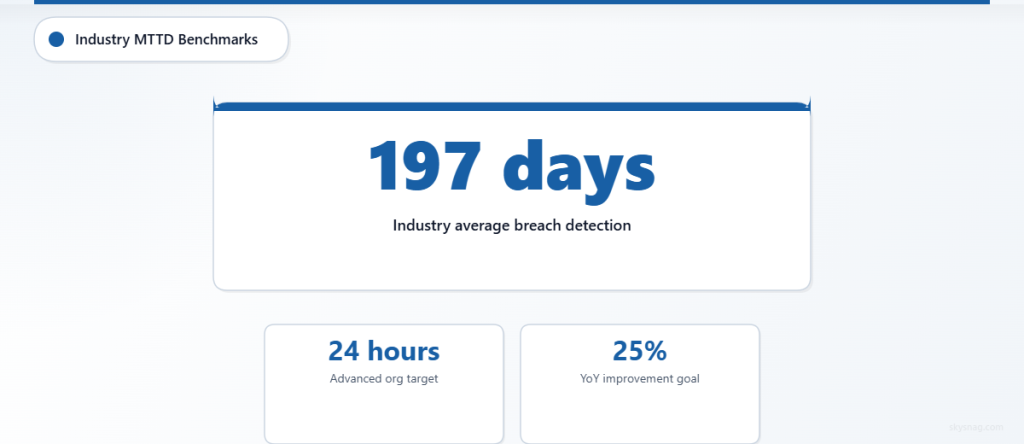
Mean Time to Detect Benchmarks:
- Advanced organizations: Under 24 hours for critical incidents
- Industry average: 197 days for major breaches (per recent industry research)
- Target improvement: 25% reduction year-over-year
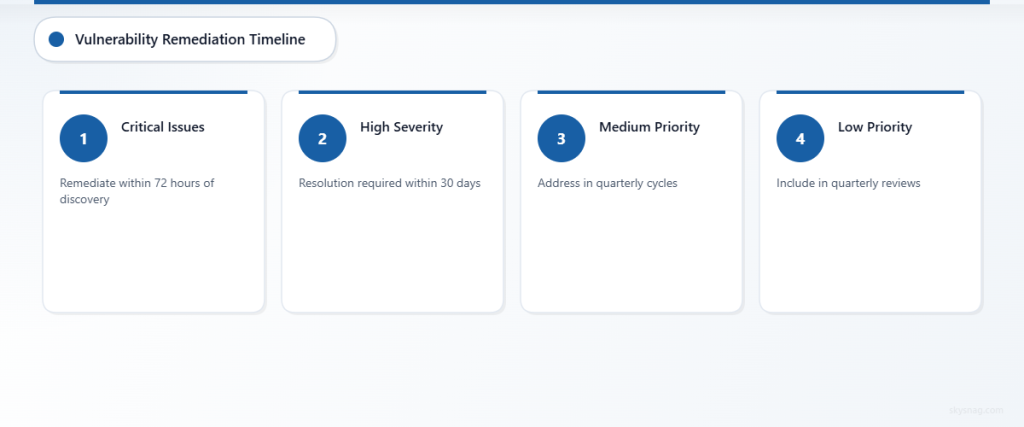
Vulnerability Management Targets:
- Critical vulnerabilities: Remediation within 72 hours
- High-severity issues: Resolution within 30 days
- Medium/Low priorities: Quarterly remediation cycles
Security Awareness Effectiveness:
- Phishing simulation failure rates: Under 10% after training
- Security training completion: 95% within defined windows
- Incident reporting accuracy: Above 80% for employee-identified issues
Compliance Integration Strategy

Security KPIs should align with compliance requirements to demonstrate program effectiveness during audits. Organizations can implement email authentication controls through platforms like Skysnag Comply to support measurable improvement in email security posture.
Document control effectiveness evidence through systematic metric collection. This approach supports both operational security improvement and compliance demonstration needs.
IV. Automation Opportunities for KPI Collection
Automated Data Collection Systems
Manual KPI collection creates sustainability challenges and introduces data accuracy risks. Modern security programs benefit from automated metric collection across multiple data sources.
SIEM Integration: Configure security information and event management platforms to automatically generate KPI reports. Focus on metrics that update in real-time and provide actionable insights for security team decision-making.
Vulnerability Scanning Automation: Implement automated vulnerability assessment tools that track remediation progress and generate executive-level trending reports. Include risk scoring and business impact analysis in automated outputs.
Security Awareness Platforms: Deploy training platforms with built-in analytics that automatically track completion rates, test scores, and behavioral improvement metrics. Integrate with HR systems for comprehensive coverage reporting.
Reporting Standardization
Establish standardized reporting templates that ensure consistent metric presentation across different security domains. Include contextual information that helps executives understand metric significance and required actions.
Create automated alert thresholds that trigger escalation when KPIs fall below acceptable performance levels. Build in trending analysis to identify gradual degradation before it becomes critical.
V. Advanced KPI Implementation Strategies
Predictive Security Metrics
Move beyond reactive measurement to predictive analytics that identify emerging risks before they manifest as incidents. Implement metrics that measure security program maturity and future risk likelihood.
Threat Intelligence Integration: Track external threat landscape changes and correlate with internal security posture metrics. Measure how effectively security programs adapt to evolving threat environments.
Security Posture Scoring: Develop comprehensive security posture scores that combine multiple KPI categories into executive-friendly ratings. Include peer comparison and industry benchmarking in scoring methodologies.
Cross-Functional Alignment
Security KPIs should integrate with broader business metrics to demonstrate value alignment. Connect security performance with business continuity, revenue protection, and operational efficiency measurements.
Business Impact Correlation: Establish clear connections between security KPI improvements and measurable business outcomes. Document how security investments translate to reduced business risk and improved operational resilience.
Stakeholder Communication: Develop role-specific KPI reporting that provides relevant insights for different stakeholder groups. Technical teams need operational metrics while executives require strategic performance indicators.
VI. Key Takeaways
Effective cybersecurity KPI programs require strategic selection of metrics that provide actionable insights for executive decision-making. Focus on trend analysis and comparative benchmarking rather than static point-in-time measurements.
Automation enables sustainable KPI collection while ensuring data accuracy and timeliness. Invest in integrated platforms that combine multiple security data sources into comprehensive executive dashboards.
Success depends on aligning security metrics with business objectives and compliance requirements. Modern platforms like Skysnag Comply help organizations implement measurable security controls that support both operational improvement and regulatory compliance.
Regular assessment and refinement of KPI programs ensures continued relevance as threat landscapes and business requirements evolve. Establish quarterly review processes to evaluate metric effectiveness and adjust measurement strategies accordingly.