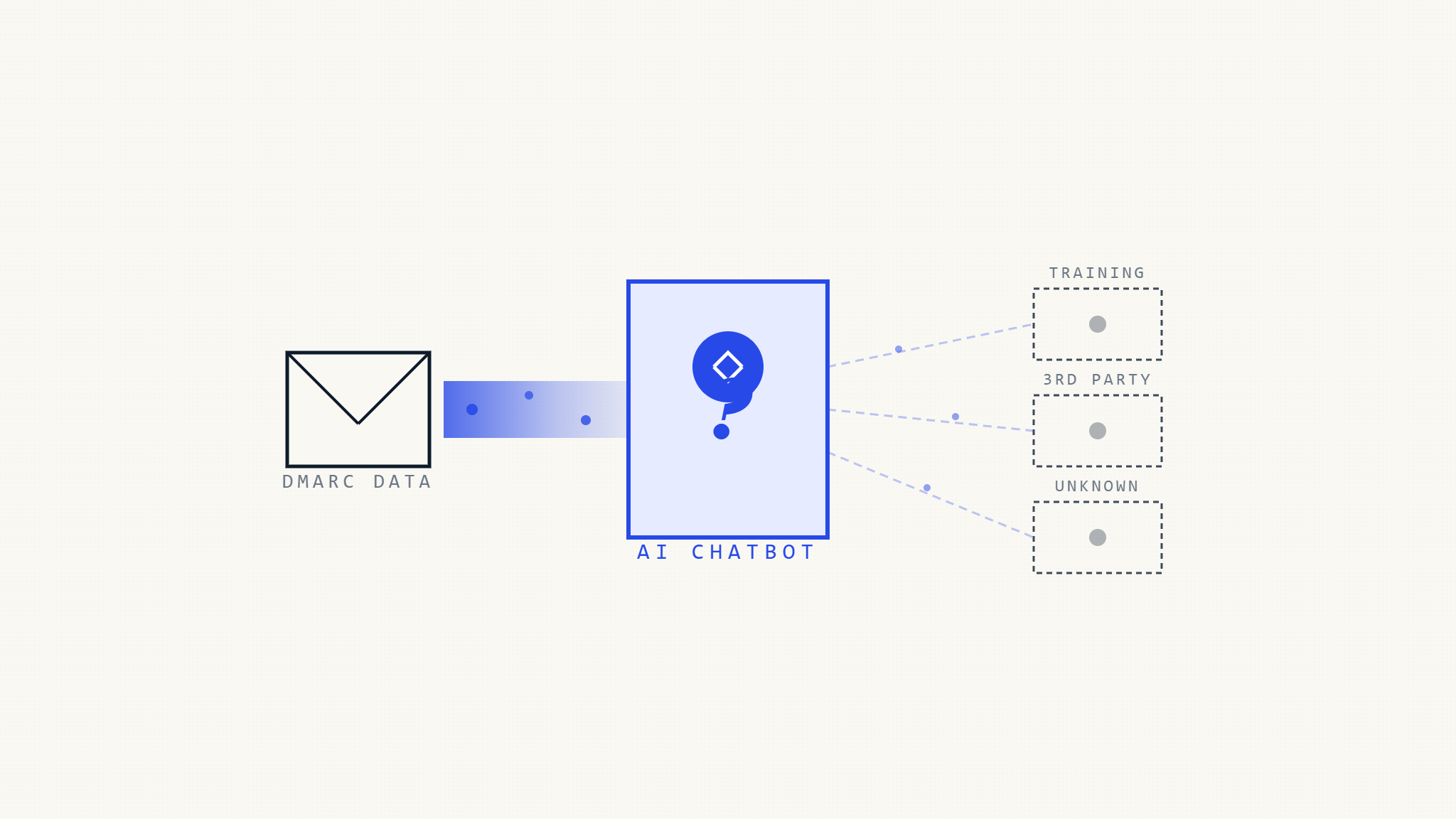
AI-powered cybersecurity tools have changed how organizations handle email authentication, but they’ve also created data privacy concerns that many security leaders are just beginning to understand. When you upload DMARC reports to AI chatbots for analysis, that sensitive information doesn’t just disappear—it travels through complex processing pipelines that most vendors won’t fully explain.
Understanding where your DMARC data goes isn’t academic. It’s about protecting your organization’s email intelligence from unintended exposure while still getting the threat detection benefits that AI can provide.
I. What Data Do DMARC AI Chatbots Actually Collect?
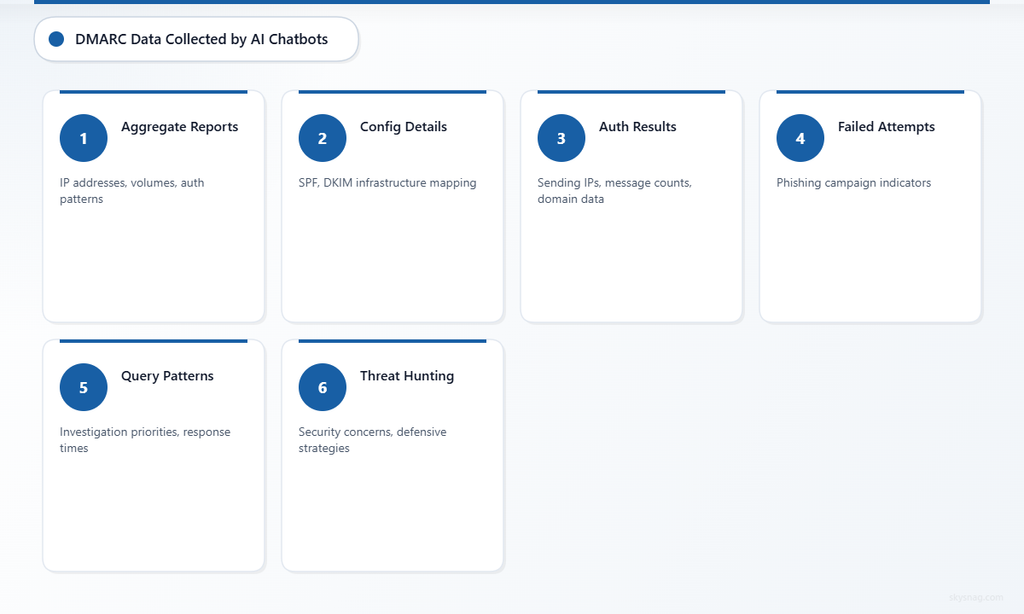
Most security teams underestimate how much sensitive information these systems actually process. DMARC AI chatbots don’t just look at pass/fail results—they analyze:
Email Intelligence Data:
- Complete DMARC aggregate reports with IP addresses, sending volumes, and authentication patterns
- SPF and DKIM configuration details that map your email infrastructure
- Sending IP addresses, message volumes, and authentication results by domain
- Failed authentication attempts indicating potential phishing campaigns (though forensic reports are rarely enabled due to privacy concerns)
Operational Metadata:
- Your team’s query patterns, which reveal investigation priorities and response times
- Specific threat hunting questions that expose current security concerns
- Configuration changes showing your defensive strategies
This creates a detailed profile of your email security posture and infrastructure—exactly the kind of intelligence that competitors or attackers would find valuable.
II. The Hidden Data Journey: Where Your DMARC Information Travels
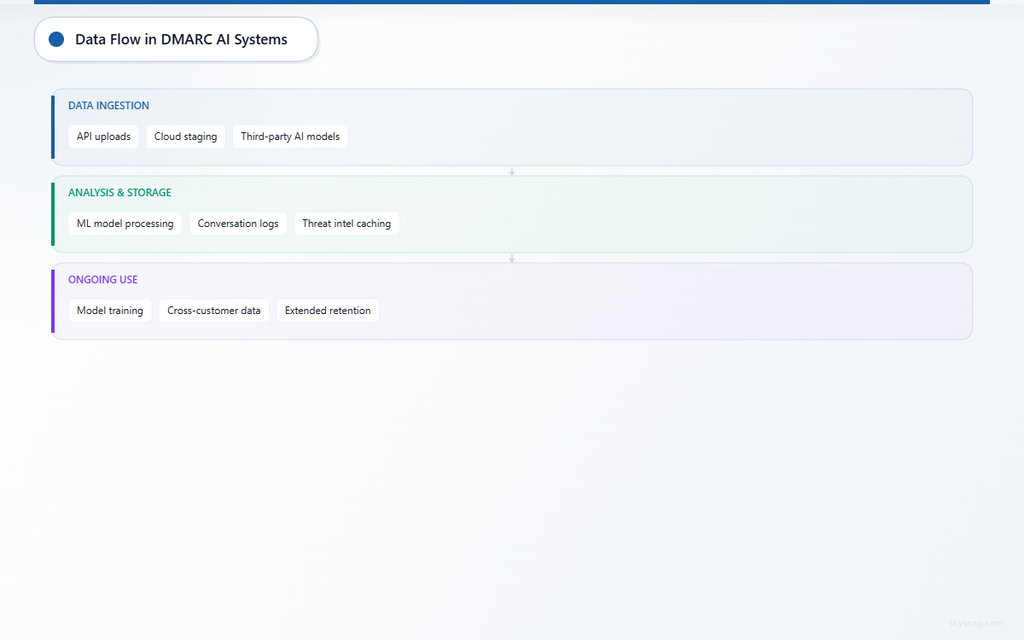
Here’s what most vendors won’t clearly explain about their data processing:
Initial Processing:
Data gets ingested through APIs or uploads to cloud servers, stored temporarily in staging environments, then integrated with third-party AI models that may retain information for training.
Analysis and Storage:
Your data flows through machine learning models hosted by major cloud providers, potentially gets retained in conversation logs, and may be cross-referenced with threat intelligence databases that cache your queries.
Ongoing Utilization:
The information often gets used for model training to improve responses for all customers, integrated into broader threat intelligence datasets, and retained for periods that may extend well beyond your subscription.
Most privacy policies are deliberately vague about retention periods, third-party sharing agreements, or where your email authentication data actually gets stored geographically.
III. Compliance Implications: When AI Data Handling Meets Regulatory Requirements
Organizations subject to data protection regulations face particular challenges here. DMARC aggregate reports contain domain-level data including IP addresses and message volumes, but typically don’t include individual email addresses. However, forensic reports—rarely used in production—may contain more detailed information that could trigger GDPR or similar regulatory requirements.
Many AI chatbot services process data across international boundaries, potentially violating data transfer restrictions. For organizations in regulated industries, using these tools without understanding data flows could create compliance gaps that surface during audits.
IV. Evaluating AI Chatbot Data Privacy: Key Questions for Security Leaders
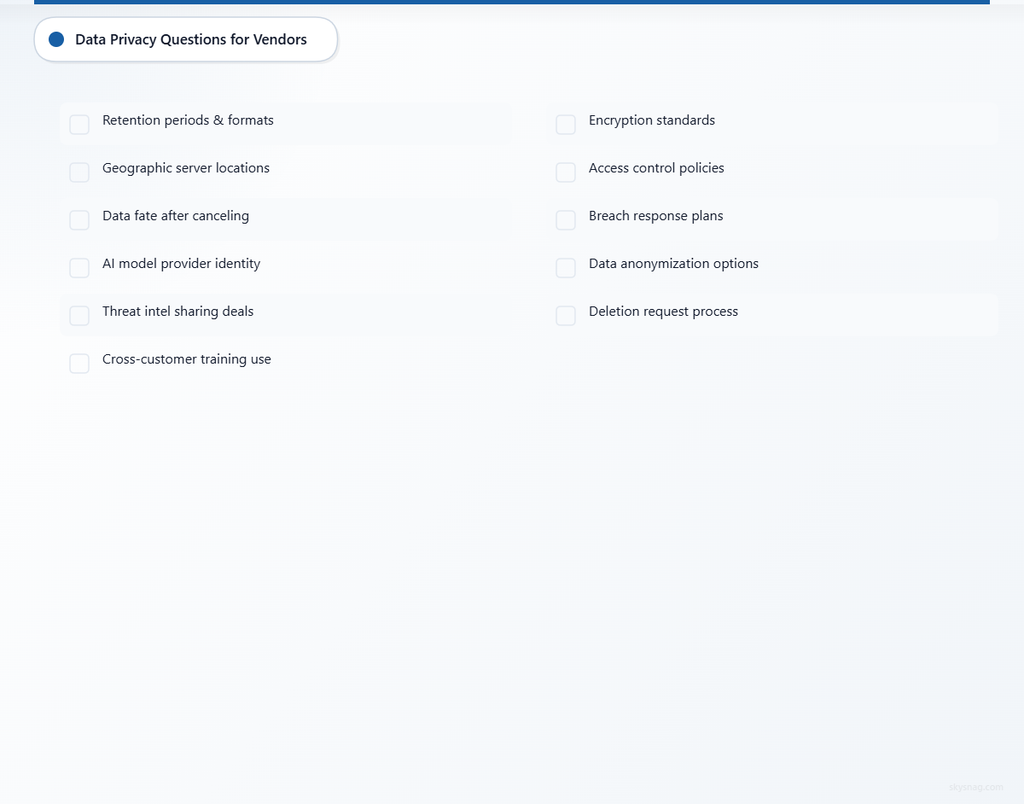
Before implementing any DMARC AI solution, demand clear answers to these questions:
Data Storage and Retention:
- How long is DMARC data retained, and in what format?
- Where are processing servers located geographically?
- What happens to your data if you cancel the service?
Third-Party Relationships:
- Which AI model providers actually process your DMARC data?
- Are there data sharing agreements with threat intelligence vendors?
- How is your data used to train models for other customers?
Security Controls:
- What encryption standards protect data in transit and at rest?
- How are access controls implemented for personnel?
- What incident response procedures exist for data breaches?
Data Minimization:
- Can you control which DMARC data elements get processed?
- Are there options to anonymize data before analysis?
- Can you request deletion of specific datasets?
Most vendors struggle to answer these questions with specificity.
V. Mitigating DMARC AI Data Privacy Risks
Organizations can balance AI benefits with data protection through several approaches:
Implement Data Minimization:
Share only essential DMARC data elements needed for specific analysis tasks. Strip out metadata like internal hostnames or detailed subdomain structures before uploading to AI systems.
Use Hybrid Processing Models:
Consider solutions that perform initial processing on-premises or in your cloud environment, then send anonymized results to AI services. This maintains AI benefits while reducing data exposure.
Establish Clear Data Governance:
Create specific policies for AI tool usage with security data. Define who can share DMARC data with AI systems, under what circumstances, and with which vendors.
Regular Vendor Assessments:
Continuously evaluate providers’ data handling practices. Privacy policies and processing agreements change, often without clear notification.
Skysnag Protect addresses these concerns by processing DMARC data within controlled environments that maintain clear data boundaries, allowing organizations to leverage AI insights while keeping visibility over their email security data.
VI. Building a Privacy-First DMARC AI Strategy
The most effective approach prioritizes data privacy from the beginning:
Start with Privacy Requirements:
Define your organization’s data privacy needs before evaluating AI solutions. Understand which data elements are most sensitive and establish clear boundaries for external processing.
Implement Tiered Data Sharing:
Create different sharing levels based on sensitivity. Share aggregate statistics for routine analysis while restricting detailed data to critical investigations.
Maintain Alternative Analysis Capabilities:
Don’t become completely dependent on AI chatbots. Keep internal expertise and tools that can provide insights without external data sharing when privacy requirements are strictest.
The goal is getting AI capabilities to enhance email security while maintaining appropriate control over organizational data.
VII. Key Takeaways
DMARC AI chatbot data privacy requires careful vendor evaluation, clear understanding of data flows, and appropriate controls. Organizations must balance AI-powered email security benefits with their data protection obligations and risk tolerance.
Success means treating AI chatbots as powerful tools within a broader data governance framework, not standalone solutions. By maintaining visibility into data handling practices and implementing appropriate safeguards, security teams can use AI capabilities while protecting their most sensitive email authentication intelligence.
Ready to implement DMARC monitoring with clear data privacy controls? Explore Skysnag Protect to see how advanced email authentication analysis can work within your organization’s privacy requirements.