Conheça a Empresa
A Banque Postale du Congo é uma instituição financeira pública com sede em Brazzaville, República do Congo. Construída sobre o legado bancário postal do país, a BPC fornece serviços bancários para indivíduos, empresas e organizações em toda a República do Congo.
Para uma instituição que atende necessidades bancárias públicas, empresariais e voltadas ao cliente, a comunicação por email confiável é essencial. A proteção em nível de domínio ajuda a reduzir o risco de falsificação de identidade e preservar a confiança nas comunicações oficiais do BPC.
Desafio
Para um banco, a segurança de email não se limita à filtragem de spam ou proteção de caixas de correio. Os atacantes frequentemente tentam abusar de marcas financeiras confiáveis através da personificação de executivos, equipes de atendimento ao cliente, equipes de pagamento, alertas, extratos ou comunicações de banking digital. O Banque Postale du Congo precisava reduzir este risco de personificação ao nível de domínio em toda a sua infraestrutura de domínio principal e subdomínios, mantendo simultaneamente o controlo sobre fluxos de email de alto volume e a segurança MX on-premise existente.
Por Que Skysnag
O Banque Postale du Congo já possuía controles de segurança de e-mail implementados, incluindo proteção robusta de MX e segurança no nível MTA. A lacuna remanescente era a confiança no domínio: garantir que apenas sistemas autorizados pudessem enviar em nome do banco, e que fontes não autorizadas ou suspeitas pudessem ser identificadas, monitoradas e controladas.
Valor de Segurança
O Skysnag adiciona proteção em nível de domínio contra spoofing, imitação e envio não autorizado em domínios bancários confiáveis.
Valor operacional
A Skysnag oferece às equipes de TI e segurança um modelo mais claro para gerenciar remetentes, subdomínios, registros de autenticação e prontidão para aplicação de políticas.
Modelo de implementação
A implementação foi projetada em torno da continuidade bancária. Em vez de interromper a infraestrutura de e-mail existente do banco, a Skysnag atuaria como uma camada de autenticação de domínio e confiança, ajudando a equipe a mapear remetentes legítimos, revisar a postura de autenticação e avançar em direção a uma proteção mais robusta sem interromper fluxos críticos de e-mail.
Etapas de implementação
- Mapear remetentes legítimos – Identificar os sistemas que enviam e-mail para o domínio principal e subdomínios, incluindo infraestrutura interna e plataformas de terceiros.
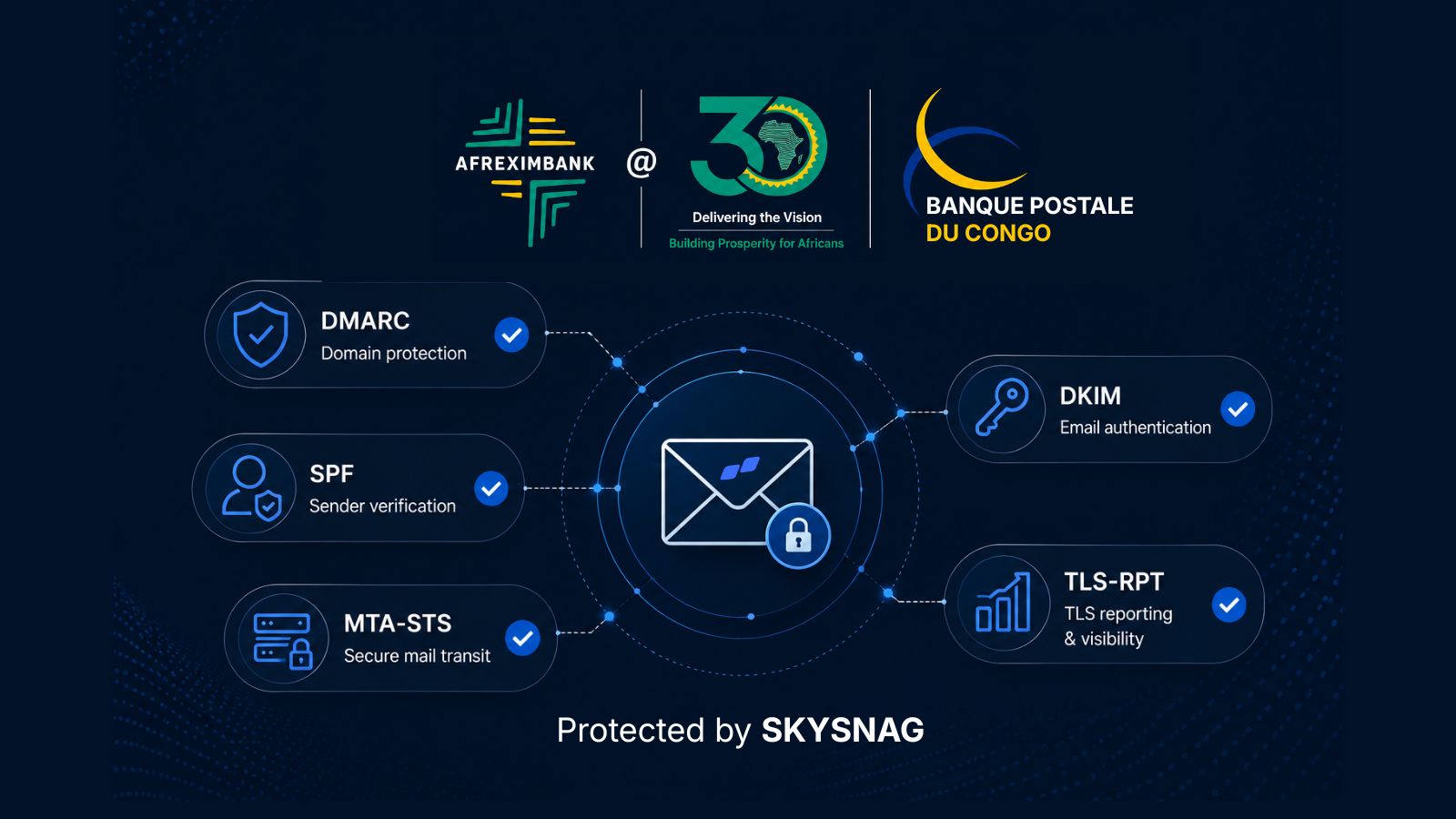
- Feche as lacunas de autenticação – Revise a postura de SPF, DKIM, DMARC, MTA-STS e relatórios TLS para detectar pontos fracos e fontes não autorizadas.
- Avançar em direção à aplicação – Fortalecer as políticas gradualmente para que o banco possa reduzir o risco de falsificação de identidade sem interromper as comunicações bancárias legítimas.
Resultados e sinais de prova
O valor do projeto é medido pela redução de riscos, controle e visibilidade operacional. Para um banco, o objetivo não é apenas melhorar a entregabilidade, mas dificultar que atacantes utilizem indevidamente os domínios confiáveis da instituição em campanhas de phishing, fraude ou personificação de marca.
Estatísticas de Resultados
Alto Volume
FLUXOS DE EMAIL
Multi-domínio
INFRAESTRUTURA
MX on-premises
SEGURANÇA DE E-MAIL
O que isto significa para instituições financeiras públicas e privadas
Os bancos frequentemente investem pesadamente em segurança de perímetro, caixa de correio e camada de transporte, mas os invasores ainda podem explorar a autenticação de domínio fraca para personificar a marca. Este caso mostra por que as instituições financeiras precisam de uma camada dedicada de confiança de domínio que complemente a segurança existente de MX e MTA, proteja a confiança do cliente e dê às equipes de segurança um controle mais claro sobre quem tem permissão para enviar em nome do banco.